
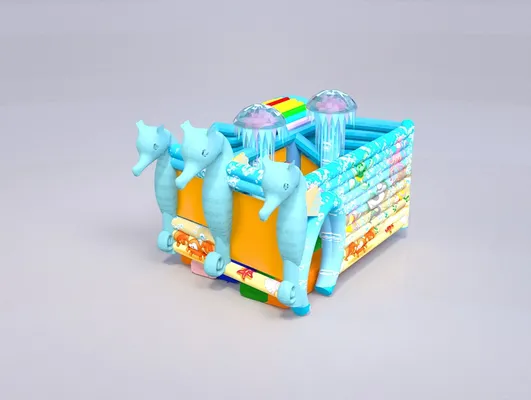
An animal bounce house can become a dependable event product when its venue fit, transport and operating routine are planned together. For a mobile event operator, the best-looking inflatable can still be the wrong asset if it does not fit the delivery route. Travel time, vehicle volume, crew size, site access, setup windows and weather policies all shape whether a booking runs smoothly. An animal theme offers an easy visual hook for family events, while the listed 5–6 m size range provides a useful starting point for venue screening.
The Animal Shaped Inflatable Bouncy Castle is described as a PVC-tarpaulin structure for events, parties, rental businesses and parks, with a blower required for setup. This guide turns those supplied facts into an operational planning framework. It does not replace the manufacturer’s instructions, local rules or a site-specific risk assessment, and it does not assume that every model or custom design packs, anchors or operates identically.
A project story: from empty space to purposeful play
Consider a hypothetical Saturday with a school fair in the morning and a community festival in the afternoon. The first site has a narrow gate and a short setup slot; the second is open grass but farther from vehicle access. The operator’s challenge is not simply to inflate the unit twice. It is to know the packed dimensions and weight, protect travel time, verify the surface and power at both sites, and leave enough margin for inspection and orderly handover.
An animal silhouette can help both clients promote the booking and guests find the attraction, but theme does not solve logistics. Before accepting either event, the operator needs the exact footprint of the selected version, required clearances, blower details, anchoring instructions, crew requirements and acceptable operating conditions. A stated 5–6 m range is not a substitute for the final technical sheet.
What the product data actually establishes
The following snapshot is limited to information supplied in the source catalog for this product. It is a useful briefing reference, not a substitute for the final quotation, technical drawings, manuals or local professional review.
- Listed size: 5–6 m, with custom sizes noted
- Material: PVC tarpaulin
- Setup: Requires an air blower
- Theme: Animal / cartoon
- Intended contexts: Events, parties, rental businesses and parks
Before relying on any figure, ask the supplier to connect it to the exact configuration being quoted. Custom colors, modules, dimensions or options can change the project interfaces. Keeping the approved product schedule, drawings and operating documents together also helps designers, installers and the future operations team work from the same information.
Plan the experience before fixing the layout
Build a venue-screening form that every client completes. Ask for the usable area, surface type, slope, overhead obstacles, access width, distance from unloading, available electrical supply and photographs taken from several angles. Record whether the location is indoors or outdoors and who has authority to delay or stop operation. This turns suitability into a repeatable decision instead of a hurried conversation on arrival.
Next, design the route around one complete operating cycle: load, travel, unload, position, set up according to supplied instructions, inspect, operate, close, deflate, pack and reload. Add realistic buffers for traffic, damp equipment and customer questions. The catalog describes portability and quick installation in general terms, but an operator should time the actual crew with the delivered unit before selling tightly spaced bookings.
Buyer questions that improve the project brief
A useful inquiry explains the site and intended operation instead of asking only for a price. Send measurements, photographs, user groups, preferred activities, opening context and known constraints. Then use the answers below as documented decision points. Any limit or technical requirement should come from the final product package and the professionals responsible for the actual site.
- Request exact inflated and packed dimensions, packed weight and package count for the chosen design.
- Confirm the included blower specification and compatibility with power at target venues.
- Obtain the manufacturer’s anchoring, setup, operating and weather instructions.
- Ask which animal shapes, colors, branding elements and optional play modules alter the footprint.
- Clarify repair-material availability and the recommended inspection and cleaning methods.
- Verify delivery contents immediately and document the first controlled setup before commercial use.
Installation, handover and everyday operation
Prepare labeled kits rather than one miscellaneous tool box. A setup kit, cleaning kit, approved repair kit and documentation folder are easier to check between bookings. Use a written load diagram so blowers, ground hardware and protective sheets are not left behind. Staff training should follow the instructions supplied for the exact unit; generic experience with another inflatable is useful, but it is not evidence that the procedures are identical.
Weather and site conditions require a predetermined decision path. Record the manufacturer’s limits and local requirements, identify who monitors conditions, and give clients a clear postponement or cancellation process. Keep an event log for setup checks, incidents, cleaning and repairs. These controls are less visible than the animal artwork, yet they determine whether the inflatable can be operated consistently across a busy route.
Keep a controlled record of revisions from first concept through handover. At completion, reconcile the installed equipment with the approved component schedule and collect the documents, training records and contact routes that the operating team will need. This is also the right time to confirm which changes require supplier input rather than an improvised local modification.
For broader project research, explore our commercial inflatable castles collection and the related inflatable castle buying guide.
Frequently asked questions
Is this bounce house exactly 5 m or 6 m?
The listing states a 5–6 m range and notes custom sizes. Ask for a drawing and exact dimensions for the quoted design before confirming any venue.
Does it include a blower?
The product data says a blower is required, but it does not establish what is included in every order. Confirm the supplied equipment, voltage and operating instructions in writing.
Can it be used indoors?
The listing mentions indoor and outdoor environments. Indoor suitability still depends on clear height, access, ventilation, floor protection, anchoring method, power and venue rules.
What is the best animal design for rentals?
Choose for your customer mix and transport model. A distinctive shape may market well, but custom additions can change packed volume, footprint and setup time, so compare the final technical details.
Discuss the exact product for your site
Use the exact Animal Shaped Inflatable Bouncy Castle page as your starting reference, then request the drawing, packing data, blower information and operating documents for the specific 5–6 m or custom version you are considering. View Animal Shaped Inflatable Bouncy Castle PVC 5m 6m Kids Playground Commercial Bounce House.