
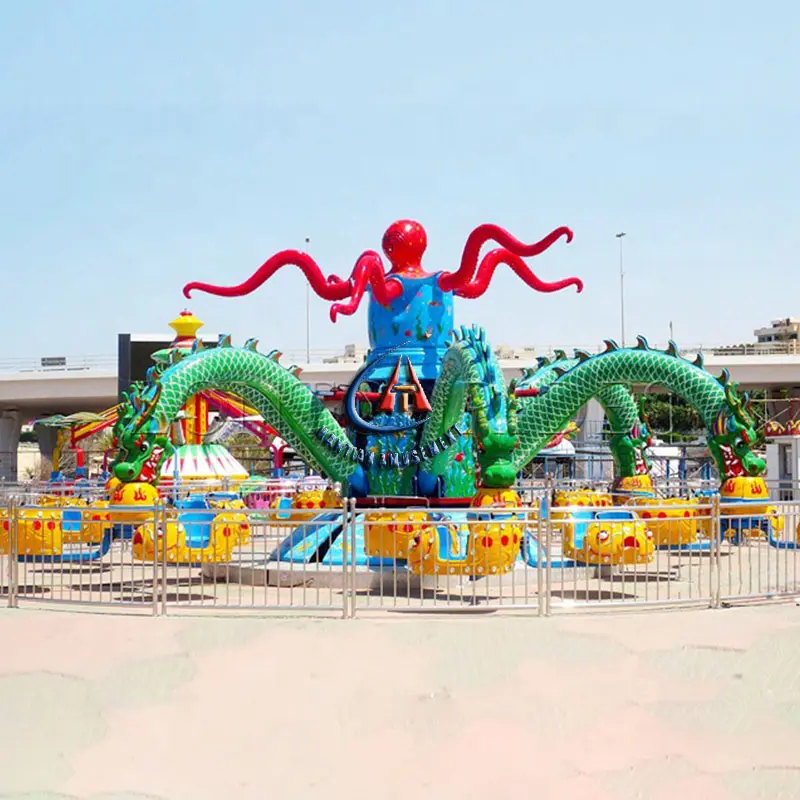
An octopus ride becomes more memorable when it anchors a coherent marine zone instead of standing as an isolated attraction. An ocean-themed zone becomes memorable when every element contributes to the same world. A colorful octopus with fish-shaped cabins can provide an immediate centerpiece, but the stronger merchandising move is to let that centerpiece organize the surrounding guest experience: the approach becomes a shoreline, the queue becomes an expedition briefing and nearby activities become smaller discoveries within the same marine story.
The Octopus Ocean Ride listing describes rotating and wave motion, fiberglass and steel construction, LED lighting and a 12–16-player capacity. Those details make it a plausible visual anchor for an indoor or outdoor children’s area. They do not establish fit for a particular venue, passenger group or regulatory regime, so this guide pairs creative direction with the practical questions a buyer still needs to answer.
A project story: from empty space to purposeful play
Picture a family entertainment center renovating one corner of its ride floor. In the illustrative concept, a blue pathway leads toward the octopus, overhead graphics suggest bubbles and the queue panels introduce the fish cabins as an exploration fleet. A nearby toddler activity becomes the ‘tide pool,’ while a photo wall extends the story for family members who are not riding. The zone reads as one destination even though it contains different experiences.
The ride’s movement can shape the visual rhythm. Guests see cabins circle and rise while they approach, so signs and displays should not block that view. At the same time, the queue and viewing area need separation from the operating perimeter. Lighting should support the marine palette without obscuring instructions or creating glare for the operator. Storytelling works best when the operational plan remains easy to read.
What the product data actually establishes
The following snapshot is limited to information supplied in the source catalog for this product. It is a useful briefing reference, not a substitute for the final quotation, technical drawings, manuals or local professional review.
- Theme: Ocean / octopus / marine
- Movement: Rotating and wave motion
- Listed capacity: 12–16 players
- Materials: Fiberglass, steel and LED lights
- Cabins: Fish-shaped passenger cabins are described
Before relying on any figure, ask the supplier to connect it to the exact configuration being quoted. Custom colors, modules, dimensions or options can change the project interfaces. Keeping the approved product schedule, drawings and operating documents together also helps designers, installers and the future operations team work from the same information.
Plan the experience before fixing the layout
Create a zone hierarchy: one hero, two supporting ideas and one repeatable graphic language. Let the octopus remain the hero. Supporting experiences can use coral, fish or submarine cues without competing in scale. Repeat a limited palette and icon set across entrance, queue, staff point and retail or photo areas. This is more coherent—and easier to maintain—than applying unrelated ocean graphics to every available surface.
Plan the guest path through three moments: discovery, decision and reunion. Discovery should reveal the attraction from a distance. The decision point needs clear model-specific eligibility and ride information before guests join the line. Reunion brings riders and companions together without blocking the exit. If the ride is outdoors, also consider sun, weather, drainage and the night-time role of the listed lighting system.
Buyer questions that improve the project brief
A useful inquiry explains the site and intended operation instead of asking only for a price. Send measurements, photographs, user groups, preferred activities, opening context and known constraints. Then use the answers below as documented decision points. Any limit or technical requirement should come from the final product package and the professionals responsible for the actual site.
- Request exact footprint, height, operating envelope, transport data and foundation loads.
- Confirm passenger eligibility, cabin arrangement, restraints, cycle and operating procedures.
- Obtain electrical requirements and distinguish included lighting, controls and music from options.
- Ask for finish samples and identify which ocean colors, cabin designs, logos and lighting patterns are customizable.
- Define installation, commissioning, training, spares and handover-document scope.
- Have the model and site plan reviewed for approvals and inspections required at the intended venue.
Installation, handover and everyday operation
Coordinate installation with the zone build. Foundations and utilities should be resolved before themed finishes hide access, while the delivery and lifting route should stay clear. Decorative flooring, props or rails must respect the manufacturer’s operating envelope and maintenance access. Test the selected lighting under actual ambient conditions and check that essential information remains legible.
Daily standards should cover the ride, queue and story environment. Follow the supplied inspection and maintenance procedures, document defects and use the exact passenger and loading rules for the delivered model. Clean high-touch cabins and queue elements with appropriate methods. A themed zone loses credibility quickly when broken graphics, uncontrolled clutter or nonfunctioning lights remain visible, even if the central ride operates.
Keep a controlled record of revisions from first concept through handover. At completion, reconcile the installed equipment with the approved component schedule and collect the documents, training records and contact routes that the operating team will need. This is also the right time to confirm which changes require supplier input rather than an improvised local modification.
For broader project research, explore our commercial amusement park equipment collection and the related family amusement ride planning guide.
Frequently asked questions
What motion does the octopus ride use?
The listing describes 360-degree rotation with wave-style lifting movement. Confirm the exact motion, cycle and controls for the quoted configuration.
How many passengers can ride?
The product data lists 12–16 players. Final capacity and eligibility must come from the model-specific documentation and applicable review.
Can the marine theme be customized?
The listing notes color themes, logos, cabin designs and LED patterns as customization options. Record selected options clearly in the order documents.
Is it appropriate indoors?
Indoor and outdoor applications are listed. Indoor feasibility depends on access, dimensions, structural support, electrical supply, ventilation, clearances and local requirements.
Discuss the exact product for your site
Visit the exact Octopus Ocean Ride page, then request the detailed model package and use it to coordinate your ocean-zone story, floor plan, utilities and operating process. View Octopus Ride for Sale | Kids Ocean Theme Amusement Ride.