
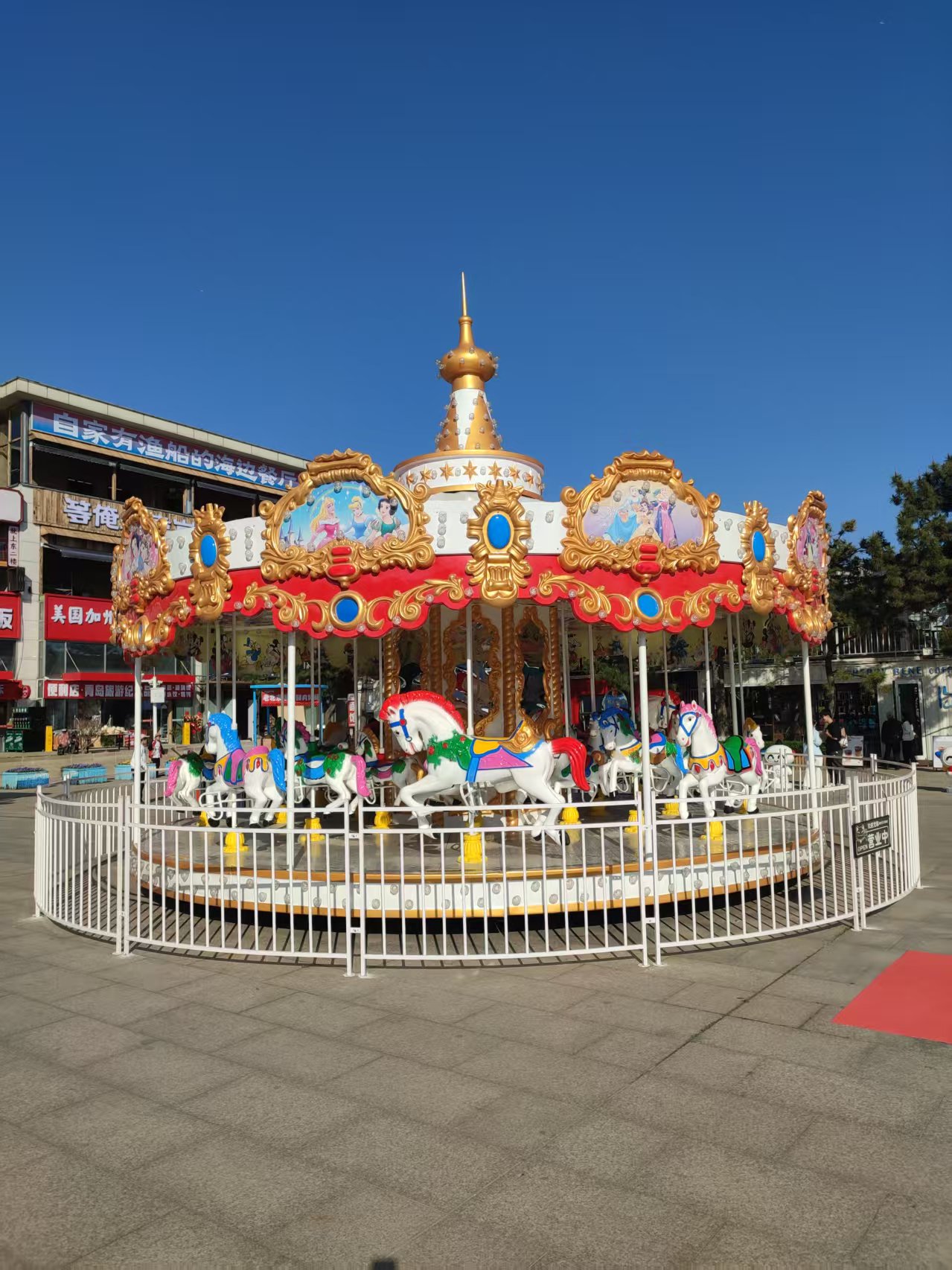
A double-deck carousel can organize an entire visitor zone when its landmark role and operating footprint are designed together. A double-deck carousel is not background equipment. Its height, circular motion and illuminated architecture can become the object visitors use to orient themselves: meet at the carousel, photograph the carousel, then explore the surrounding district. That makes its planning closer to a small building and public square than to placing a standalone children’s attraction on an empty plot.
The product title identifies a luxury double-deck carousel, while the normalized description lists fiberglass, steel and decorative panels, an electric drive, customizable 12–36-seat configurations and optional lighting or music. These are useful starting points, but the exact quoted model must resolve dimensions, capacity, motion, utilities and structural requirements. This guide focuses on placemaking and due diligence rather than forecasting revenue.
A project story: from empty space to purposeful play
Imagine a waterfront plaza that becomes quiet after sunset. A carousel is proposed at the meeting point between restaurants, a promenade and a small events lawn. During the day it should feel elegant rather than oversized; at night its lighting should create a warm landmark without competing with wayfinding or nearby residents. Families need a clear queue, and people who are not riding still need comfortable places to watch.
In this illustrative concept, the carousel sits inside a generous pedestrian ring. The queue begins away from the main promenade, the exit leads toward the viewing area, and service access reaches the attraction without crossing the public line. Canopy and decorative colors respond to the district palette. The result is not simply a ride on paving; it is a managed room within the plaza.
What the product data actually establishes
The following snapshot is limited to information supplied in the source catalog for this product. It is a useful briefing reference, not a substitute for the final quotation, technical drawings, manuals or local professional review.
- Product concept: Luxury double-deck carousel / horse merry-go-round
- Materials: Fiberglass, steel structure and decorative panels
- Listed capacity range: 12–36 seats, customizable
- Drive: Electric motor
- Options: Lighting, music, theme and branding options are listed
Before relying on any figure, ask the supplier to connect it to the exact configuration being quoted. Custom colors, modules, dimensions or options can change the project interfaces. Keeping the approved product schedule, drawings and operating documents together also helps designers, installers and the future operations team work from the same information.
Plan the experience before fixing the layout
Plan the circles around the carousel. First is the equipment and required clearance. Next come loading, unloading, operator and queue functions. Beyond that are viewers, photography, circulation, seating and landscape. Draw these rings at peak use and during closure. A queue that works on a quiet afternoon may block a festival route, while temporary barriers can undermine a carefully composed landmark if they have no planned storage or layout.
Lighting and music need a brief of their own. Decide when effects should be subtle, celebratory or off, and coordinate power, controls and local operating constraints. Optional features should be priced and documented as part of the final configuration. For a double-deck concept, vertical circulation, passenger eligibility and staff procedures require precise model-specific information; do not infer them from a rendering or from a broad seat range.
Buyer questions that improve the project brief
A useful inquiry explains the site and intended operation instead of asking only for a price. Send measurements, photographs, user groups, preferred activities, opening context and known constraints. Then use the answers below as documented decision points. Any limit or technical requirement should come from the final product package and the professionals responsible for the actual site.
- Request exact operating and transport dimensions, height, weight, loads and foundation information.
- Confirm the deck arrangement, seat mix, passenger eligibility, access and evacuation procedures.
- Obtain electrical load, voltage, controls and details for lighting, music and optional motion.
- Review finish samples, artwork, logo integration and maintenance access for decorative panels.
- Define installation, lifting, testing, commissioning, training and technical-document responsibilities.
- Verify local planning, ride approval, inspection, accessibility and operating requirements before commitment.
Installation, handover and everyday operation
Installation may affect more of the plaza than the finished footprint. Coordinate delivery vehicles, cranes or lifting equipment if required, temporary exclusion areas, foundations, electrical routes and protection of completed landscaping. Confirm the vendor’s on-site role and the evidence required for acceptance. If the site opens in phases, keep construction and public circulation separated through a documented logistics plan.
Once operating, the landmark needs both mechanical care and presentation standards. Follow the manufacturer’s inspection and maintenance procedures, and create routines for queue equipment, lighting, music, decorative finishes and housekeeping. Staff should use model-specific eligibility and loading rules. A carousel that is central to the brand also needs a closure communication plan so maintenance does not become confusing for arriving guests.
Keep a controlled record of revisions from first concept through handover. At completion, reconcile the installed equipment with the approved component schedule and collect the documents, training records and contact routes that the operating team will need. This is also the right time to confirm which changes require supplier input rather than an improvised local modification.
For broader project research, explore our commercial amusement park equipment collection and the related family amusement ride planning guide.
Frequently asked questions
Is the carousel definitely double deck?
The product name specifies a luxury double-deck carousel, and the listing also notes single- or double-deck customization. Confirm the exact quoted arrangement and all access and operating details.
How many seats does it have?
The normalized description lists 12–36 seats as customizable. Obtain the final seat schedule and capacity basis for the selected model.
Can it operate indoors and outdoors?
Both contexts are listed, but suitability depends on dimensions, structure, climate exposure, utilities, ventilation, access and local requirements.
Are lighting and music standard?
They are described as optional or upgrade features in the listing. Ask for a supply schedule that distinguishes base equipment from selected options.
Discuss the exact product for your site
Review the exact Luxury Double Deck Carousel product page, then request a model-specific planning package so the ride, public realm, utilities and operating concept can be developed together. View Luxury Double Deck Carousel Ride Horse Merry Go Round Amusement Park Equipment Commercial.