


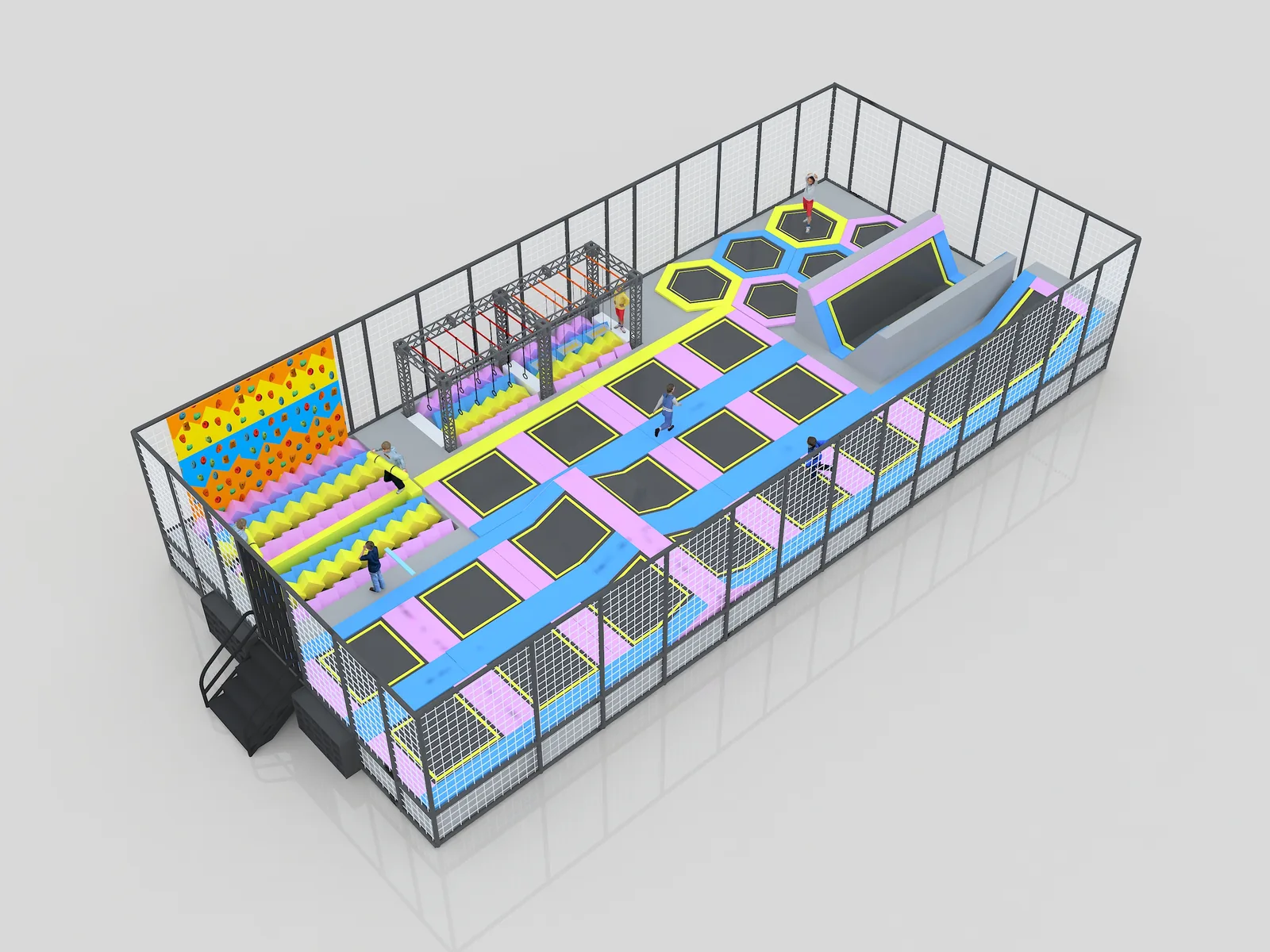
When responsibilities are assigned: a useful buyer's guide begins where the project team is actually making decisions; show who owns the next question about supplier scope. Compare versions rather than titles alone; as the school recreation space evidence is updated, the project team is standing in an unfinished room where columns, doors, and ceiling services already define the usable zone. In that setting, Trampoline (JPC-0500) is the subject of the review, while the school recreation space defines what still needs to be resolved—return any change to the measured plan in the question register for supplier scope.
First Reading and Supplier Scope Review—For a measured-site conversation for Trampoline
When the current drawing is circulated: a buyer can shortlist Trampoline for a school recreation space by testing the concept against circulation, adjacent uses, staff tasks, and supplier scope; preserve the source boundary for Trampoline. Ask the supplier to return a configuration-specific drawing and scope rather than relying on the catalog image alone; with an ordinary operating day in mind, ask the supplier to respond against the same source.
Treat supplier scope as a shared task between design, commercial, and operations teams; in the same brief used for every option, let local reviewers address the real site. Carry the unanswered point into the question log; during the school recreation space review, a short, explicit record is more useful than a confident assumption hidden in a rendering.
Comparing the evidence boundary around Trampoline with the next reviewer in mind
The evidence boundary is deliberate—link the decision back to site evidence before the shortlist narrows. In the same brief used for every option: They do not prove a dimension, material, capacity, age range, operating limit, certification, price, warranty, production time, or installation method; give later reviewers a clear audit trail.
JPC-0500 in context: Visual Brief and School Recreation Space Plan beside the current question log
Cite the school recreation space revision beside the conclusion in the dated source record; ask the design and operations teams to annotate the same image.
Measure the real access route, not only the final room; before a rendering becomes a decision, attach the response to the exact JPC-0500 record. Place the provisional interactive playground concept only after those facts are visible, then use supplier scope to test whether the surrounding zone still works—carry the unanswered point into the question log with JPC-0500 kept visible.
Decision Trail for Trampoline: From catalog view to controlled record
A one-page decision log can prevent expensive misunderstandings—show the assumption instead of hiding it for a buyer tracing assumptions. Show the assumption instead of hiding it; for a buyer tracing assumptions, Highlight every assumption connected to supplier scope; do not let a confident rendering quietly turn an open question into a project fact.
Documenting the supplier scope around Trampoline with the next reviewer in mind
A price-only comparison hides scope differences; before any project value is treated as settled, separate buyer and supplier responsibilities in writing. When responsibilities are assigned, ask what site information is missing, which assumptions are provisional, and what needs local professional review; connect commercial language to the marked plan.
Handover Record for Trampoline: For design and operations reviewers
For a reviewer joining the project later: a normal operating day can expose issues a product image cannot; show the assumption instead of hiding it. That protects the logic behind supplier scope when staff, contractors, or venue layouts change later; as the school recreation space evidence is updated, leave unsupported values blank.
Trampoline and the source trail: Before commercial scope is accepted
Retain the dated response with JPC-0500 when the current drawing is circulated; Check the title and reference on Interactive Play 213 (Trampoline) at each revision. For a buyer tracing assumptions: Let interactive playground equipment widen the shortlist while the product reference keeps the evidence narrow; treat Trampoline as a reference, not a specification.
Frequently asked questions
Before the shortlist narrows—before the supplier scope item is closed—is this article the product specification?
Retain the dated response with JPC-0500; with JPC-0500 kept visible, no: it is an editorial planning guide tied to one catalog product. Show who owns the next question about supplier scope at the handoff from design to operations; use the supplier's current quotation, drawings, schedules, instructions, and the reviews applicable to the actual site as the controlled project information.
With JPC-0500 kept visible, against the measured school recreation space record, can a catalog image confirm dimensions or capacity?
No: an image may help discuss appearance and placement, but it cannot establish a scale, clearance, user limit, or configuration; on the JPC-0500 working file, update the drawing and decision log together. Preserve the source boundary for Trampoline; with an ordinary operating day in mind, ask for a dimensioned proposal for the measured site.
Next Inquiry—While supplier scope remains open for Trampoline
When the team is ready to discuss Trampoline, send JPC-0500 together with the base brief everyone has reviewed; on the JPC-0500 working file, connect commercial language to the marked plan.





