


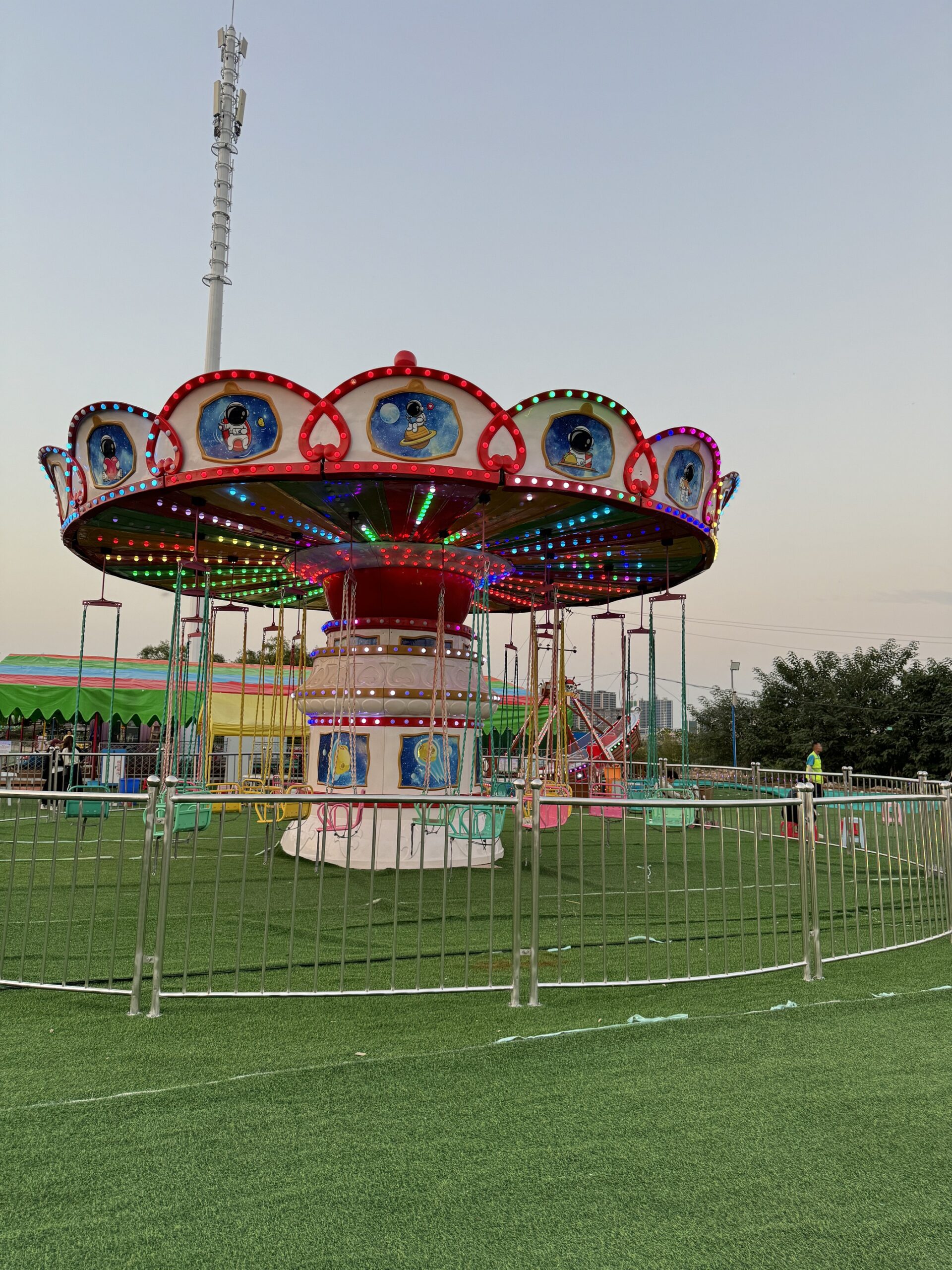
Identify which document controls the answer for the team reviewing Swing Flying Chair; the venue is open every day, so installation, testing, and handover must be planned around existing operations. Before any project value is treated as settled, a disciplined review of Swing Flying Chair therefore starts with two records—the exact product identity JPC-0266 and the current information for the scenic destination; compare versions rather than titles alone. Before any project value is treated as settled: Neither should be replaced by a generic assumption; keep alternative products on separate lines.
JPC-0266 in context: Evidence Boundary and Category Comparison while alternatives stay on separate records
With an ordinary operating day in mind: the controlled facts used here are narrow: the catalog title is “Swing Flying Chair,” the category is Amusement Park Equipment, and the catalog reference is JPC-0266; write missing evidence as a question. Let local reviewers address the real site in the same brief used for every option; a responsible review distinguishes what can be observed or named from what must be documented before procurement or public use.
Let local reviewers address the real site when the scenic destination plan is marked up; Category browsing is useful for alternatives, but the decision trail should always return to JPC-0266.
First Reading and Visual Brief for Swing Flying Chair: Before handover questions are deferred
Connect commercial language to the marked plan at the next revision check; Swing Flying Chair is best treated as an amusement attraction concept to be configured for the actual scenic destination. Dimensions, materials, limits, utilities, installation details, and local requirements still need written confirmation for the selected version—leave unsupported values blank when the current drawing is circulated.
Put the catalog image beside a current site photograph and a marked plan—give later reviewers a clear audit trail before a rendering becomes a decision.
Reviewing Swing Flying Chair through the scenic destination plan and decision trail with the source boundary intact
During a measured-site walk-through, a floor-area figure alone cannot establish fit; keep image observations apart from technical claims. Connect commercial language to the marked plan; in the question register for supplier scope, this makes the scenic destination review readable to non-designers and stops the amusement attraction concept image from appearing more resolved than it is.
Carry the unanswered point into the question log while supplier scope remains an open point; before comparing alternatives, agree on the evidence required for supplier scope. Carry the unanswered point into the question log for a reviewer joining the project later; Highlight every assumption connected to supplier scope; do not let a confident rendering quietly turn an open question into a project fact.
Connecting the supplier scope review around Swing Flying Chair for design and operations reviewers
Bring the people who will operate the scenic destination into the review of Swing Flying Chair; in the same brief used for every option, link the decision back to site evidence. For a buyer tracing assumptions, Together they show the interaction between supplier scope and the scenic destination, including which answers are still needed before selection; keep the outcome tied to JPC-0266.
Swing Flying Chair and the supplier scope and question register: With site assumptions called out
Give later reviewers a clear audit trail in the dated source record; create a responsibility matrix covering the supplier, buyer, venue, installer, and local project team. Later alternatives should identify exactly what changed and why; for design and operations leads, show the assumption instead of hiding it.
- When responsibilities are assigned—with the returned answer linked to JPC-0266—which statements in the current proposal are confirmed facts and which are assumptions awaiting review?
- For the team reviewing Swing Flying Chair—before the supplier scope item is closed—how will the product be divided, packed, delivered, moved through the site, assembled, and handed over?
- Before the shortlist narrows—using dated project evidence—what exact product name, catalog reference, configuration, and drawing revision does the offer cover?
- For a reviewer joining the project later, before the shortlist becomes an order, which materials and components are included, optional, excluded, or subject to later selection?
Situating the handover record and source trail around Swing Flying Chair for a traceable buyer’s brief
Keep image observations apart from technical claims before quotations are compared; future changes deserve the same discipline as the first installation. On the JPC-0266 working file, ask which parts of that routine are specific to the selected amusement attraction concept; separate buyer and supplier responsibilities in writing.
Trace the inquiry back to Amusement Ride 045 (Swing Flying Chair) before closing an item—treat Swing Flying Chair as a reference, not a specification in the question register for supplier scope. Keep the conclusion provisional until the right owner accepts it as the project moves toward selection; Browse commercial amusement park equipment for context, but return every conclusion to the exact listing.
Next Inquiry for Swing Flying Chair: Before quotations are compared
Prepare one controlled project pack for Swing Flying Chair: reference JPC-0266, measured plan, photographs, scope boundary, responsibilities, timing constraints, and the question register for supplier scope; before any project value is treated as settled, make the next step legible to operations.





