


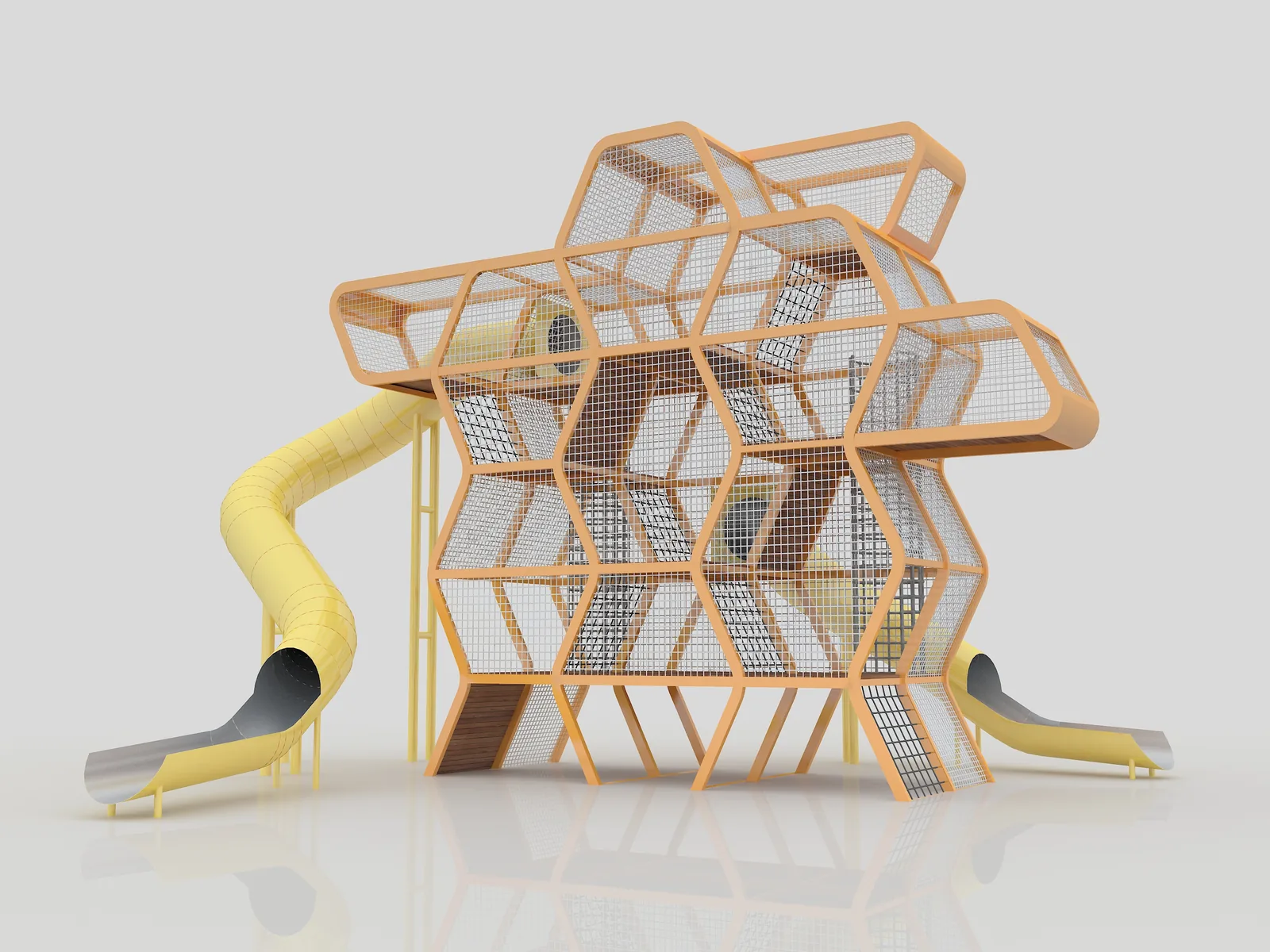
When the outdoor discovery area plan is marked up: a useful buyer's guide begins where the project team is actually making decisions; write missing evidence as a question. The project team is standing in an unfinished room where columns, doors, and ceiling services already define the usable zone; with an ordinary operating day in mind, update the drawing and decision log together. Before quotations are compared: In that setting, Slide 2 (JPC-0511) is the subject of the review, while the outdoor discovery area defines what still needs to be resolved; keep alternative products on separate lines.
First Reading and Decision Trail—Without guessing at specifications for Slide 2
In the same brief used for every option, Slide 2 answers the question “which concept are we discussing?” It does not answer “what exactly will be supplied?” For an outdoor discovery area, turn venue fit and every other unknown into a controlled inquiry, marked plan, and revision log before approval; identify which document controls the answer. When responsibilities are assigned, ask the supplier to return a configuration-specific drawing and scope rather than relying on the catalog image alone; test the conclusion against the actual outdoor discovery area.
Use a short question register beside the plan—let local reviewers address the real site when the current drawing is circulated. Test the conclusion against the actual outdoor discovery area; before the shortlist narrows, Number the items related to venue fit, attach each response to its source document, and close them only when the appropriate project owner accepts the answer.
Evidence Boundary—For a traceable buyer’s brief for Slide 2
When the current drawing is circulated, Slide 2 is the exact catalog subject of this page, tracked as JPC-0511 in Interactive Playground Equipment; preserve the source boundary for Slide 2. Ask the supplier to respond against the same source for a buyer tracing assumptions; that one-to-one link prevents the guide from drifting into a different product.
Questioning the venue fit review and outdoor discovery area plan around Slide 2 before quotations are compared
Compare versions rather than titles alone when the current drawing is circulated; For Slide 2, the best early deliverable is often a marked plan plus a one-page question log. In a supplier-ready project brief: ask what applies to the chosen Slide 2 configuration, record the answer with its source, and have the appropriate outdoor discovery area professionals review the site implications; keep the outcome tied to JPC-0511.
At the handoff from design to operations: begin with one measured base plan for the outdoor discovery area; update the drawing and decision log together. From the future operator’s perspective: the interactive playground concept proposal can then respond to the same venue fit evidence instead of a different assumption; link the decision back to site evidence.
JPC-0511 in context: Visual Brief before quotations are compared
Attach the response to the exact JPC-0511 record in the question register for venue fit; Appearance matters because visitors read the whole setting before they read a product name.
Slide 2 and the supplier scope and question register: At the handoff to the venue team
Give the supplier an opportunity to correct the brief; in the dated source record, identify which document controls the answer. Ask each response to separate included work, optional work, buyer responsibilities, venue responsibilities, exclusions, and documents supplied for review—test the conclusion against the actual outdoor discovery area before quotations are compared.
- Before supplier scope is accepted, with buyer and supplier work shown separately, which options change the appearance, footprint, access, program, documentation, or operating plan?
- With JPC-0511 kept visible—while venue fit is still being tested—what ongoing supplier contact route is available for configuration questions and replacement-part inquiries?
- As the project moves toward selection, using dated project evidence, how are revisions identified when a layout, option, component, or scope boundary changes?
- Using the current product link and source record, in the question register for venue fit, what local review or approval inputs are expected from the buyer's project team?
- During the outdoor discovery area review, without inferring a value from the image, what should be photographed, measured, or confirmed during a site review before production decisions?
Handover Record—Beside the current question log for Slide 2
Invite the future operations team to rehearse opening, routine observation, cleaning, closing, and escalation around the proposed interactive playground concept; at the handoff from design to operations, carry the unanswered point into the question log. Leave unsupported values blank; during a measured-site walk-through, their walk-through should identify the owner of venue fit, the record to be kept, and the point at which supplier guidance is needed.
Anchoring Slide 2 through the source trail and category comparison at the handoff to the venue team
While venue fit remains an open point, treat Interactive Play 224 (Slide 2) as the exact listing under review; retain the dated response with JPC-0511. Related ideas in interactive playground equipment need their own links, questions, and revision trail; at the first project briefing, write missing evidence as a question.
When responsibilities are assigned: use the wider category to build a shortlist, then bring every option back to the same measured brief; note the date and revision before closing the item.
Frequently asked questions
While the configuration is still open to review, at the first project briefing, when should operations staff join the project?
At the handoff from design to operations: before the configuration is fixed; show the assumption instead of hiding it. Attach the response to the exact JPC-0511 record; for design and operations leads, their input on circulation, observation, housekeeping, storage, access, records, and handover can reveal needs that are difficult to correct later.
With the returned answer linked to JPC-0511, with JPC-0511 kept visible, should the buyer rely on the product title for materials or functions?
Keep the handover owner visible; on the JPC-0511 working file, only as a search and identity clue. Leave unsupported values blank with JPC-0511 kept visible; ask the supplier to state the included materials, functions, options, and limits for the quoted version in controlled documents.
Using the same brief issued to every supplier, for design and operations leads, what happens if the site changes after quotation?
Update the site record, tell the supplier, and request a marked revision that explains any effect on configuration, scope, access, interfaces, program, and operations—attach the response to the exact JPC-0511 record at the first project briefing.
Next Inquiry—Without guessing at specifications for Slide 2
Before a rendering becomes a decision: send Joy Playgrounds JPC-0511, the measured site information, clear context photographs, access notes, intended operating pattern, and the unresolved questions about venue fit; separate buyer and supplier responsibilities in writing.





