


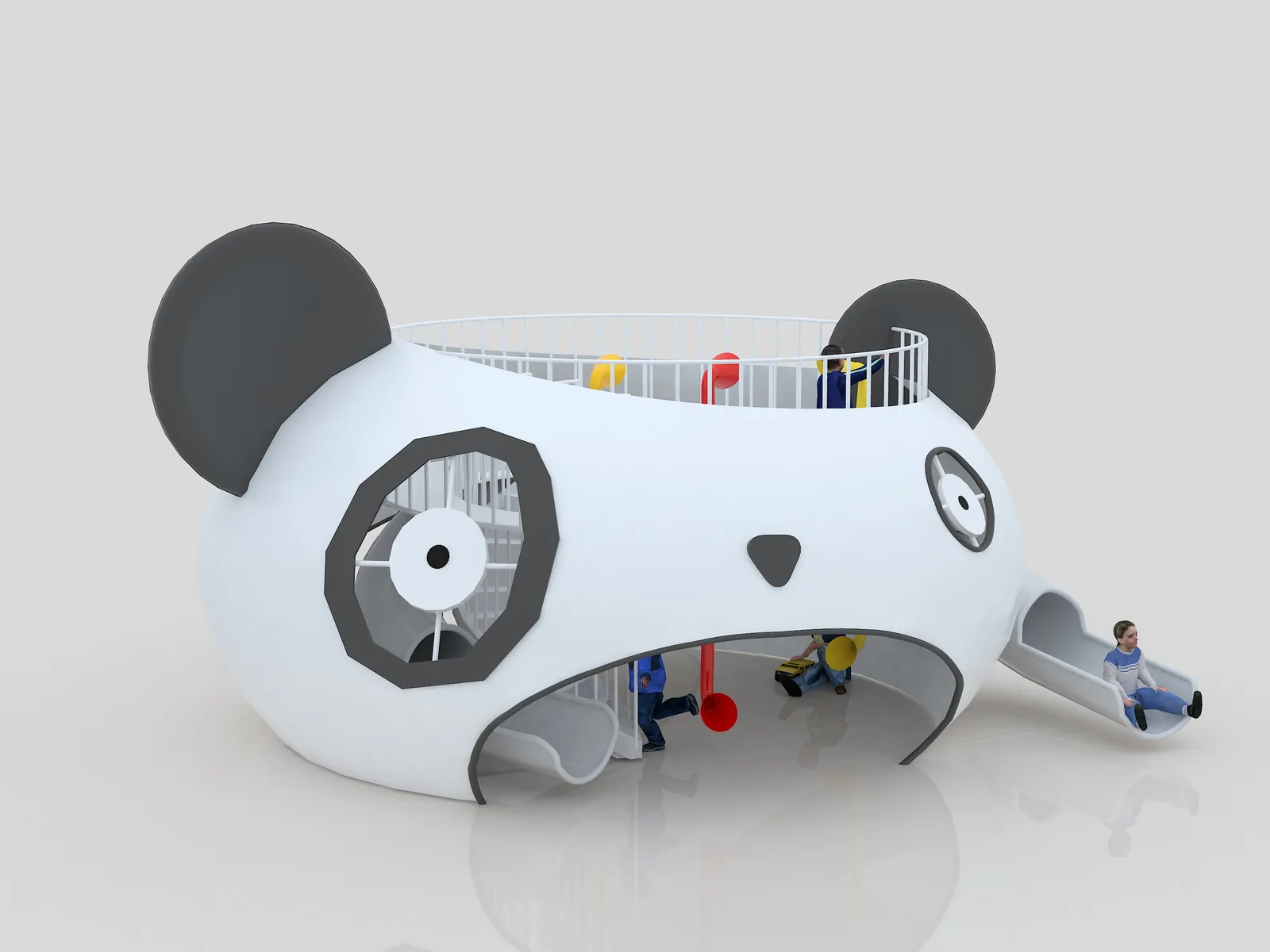
A useful buyer's guide begins where the project team is actually making decisions—note the date and revision before closing the item in the same brief used for every option. Keep alternative products on separate lines; on the JPC-0531 working file, the commercial team wants a quick quotation, while the project team needs assumptions and exclusions to be written down. Let local reviewers address the real site; before quotations are compared, In that setting, Playful Panda Play Feature (JPC-0531) is the subject of the review, while the school recreation space defines what still needs to be resolved.
Evidence Boundary and School Recreation Space Plan for Playful Panda Play Feature: Against the measured school recreation space record
Separate buyer and supplier responsibilities in writing before the shortlist narrows; Reference JPC-0531 links this article to Playful Panda Play Feature in Interactive Playground Equipment. Keep the outcome tied to JPC-0531 when the school recreation space plan is marked up; Any descriptive phrase is a way to organize the inquiry, not a promise about the supplied version.
Note the date and revision before closing the item at the first project briefing; consider the space immediately outside the proposed equipment boundary. Compare versions rather than titles alone; from the future operator’s perspective, ask the supplier which conditions affect the proposed interactive playground concept, and attach the response to the site interfaces review.
Site Interfaces Review and Decision Trail and Visual Brief—Against the measured school recreation space record for Playful Panda Play Feature
A practical review of Playful Panda Play Feature asks what improves when the team handles site interfaces well, and what remains unresolved when it does not; at the first project briefing, update the drawing and decision log together. At the first project briefing, their routine reveals the space, access, visibility, storage, or documented procedure required for site interfaces—details the initial concept may not show; update the drawing and decision log together.
Identify which document controls the answer at the next revision check; keep the commercial brief and the site drawing synchronized. Identify which document controls the answer for the team reviewing Playful Panda Play Feature; Number the items related to site interfaces, attach each response to its source document, and close them only when the appropriate project owner accepts the answer.
Ask the design and operations teams to annotate the same image; before the shortlist narrows, keep the outcome tied to JPC-0531.
Documenting Playful Panda Play Feature through the question register and supplier scope and handover record with the source boundary intact
- On the JPC-0531 working file, with unresolved points left visible, what should be photographed, measured, or confirmed during a site review before production decisions?
- For the actual school recreation space operating day, when responsibilities are assigned, what information does the supplier still need before it can issue a site-specific response?
- As the school recreation space evidence is updated—with the returned answer linked to JPC-0531—what exact product name, catalog reference, configuration, and drawing revision does the offer cover?
- Before any project value is treated as settled—with local review responsibilities identified—which user, operator, inspection, cleaning, maintenance, or emergency information will be supplied for this configuration?
- Before any project value is treated as settled, using the same brief issued to every supplier, how are revisions identified when a layout, option, component, or scope boundary changes?
Create a responsibility matrix covering the supplier, buyer, venue, installer, and local project team—link the decision back to site evidence as the project moves toward selection. In the dated source record, use rows for product identity, drawing revision, configuration, interfaces, delivery boundary, installation support, handover information, options, and unresolved items; treat Playful Panda Play Feature as a reference, not a specification.
With JPC-0531 kept visible, future changes deserve the same discipline as the first installation; attach the response to the exact JPC-0531 record. A short index should point staff to the current drawing, configuration record, routine information, escalation contacts, and the person responsible for site interfaces—test the conclusion against the actual school recreation space at the next revision check.
Playful Panda Play Feature and the category comparison and source trail: Before an image becomes a project claim
Return any change to the measured plan with JPC-0531 kept visible; Related listings may help the buyer understand available directions, but they are not interchangeable evidence.
Separate buyer and supplier responsibilities in writing; as the project moves toward selection, Reopen Interactive Play 244 (Playful Panda Play Feature) when the product record is handed to another reviewer. When the current drawing is circulated: compare directions in interactive playground equipment without transferring one product’s claims to another; connect commercial language to the marked plan.
Frequently asked questions
With buyer and supplier work shown separately, during the school recreation space review, can the product category decide where it should be installed?
No: the category organizes the catalog—treat Playful Panda Play Feature as a reference, not a specification at the next revision check. Leave unsupported values blank; at the next revision check, the selected configuration, measured venue, supplier guidance, and relevant local professional review determine whether and how a concept fits a real project.
For a buyer tracing assumptions—for the actual school recreation space operating day—what belongs in a useful handover file?
Test the conclusion against the actual school recreation space while site interfaces remains an open point; include the accepted configuration record, current drawings, supplier instructions, training and inspection information, responsibility notes, escalation contacts, and a list of open or later actions.
While site interfaces remains an open point—for the actual school recreation space operating day—does customization remove the need for site measurement?
No: customization makes accurate site information more important—keep the handover owner visible for a reviewer joining the project later. Show who owns the next question about site interfaces; during the school recreation space review, the supplier needs a reliable base record to explain how the proposed version responds to constraints and interfaces.
Next Inquiry for Playful Panda Play Feature: For a traceable buyer’s brief
Separate buyer and supplier responsibilities in writing; before a rendering becomes a decision, Turn this research into a numbered inquiry.





