
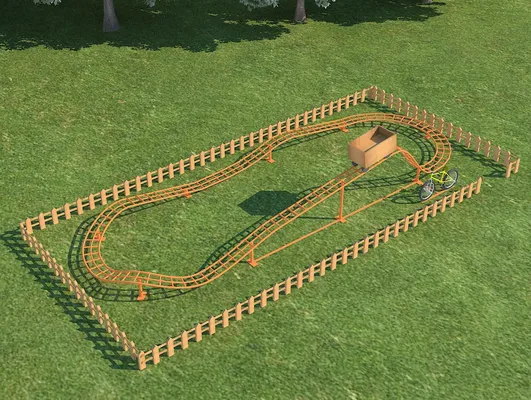
A pedal-powered parent–child ride can add cooperative family play without relying on a ride motor. Many family attractions ask guests to sit while a machine creates the experience. A pedal-powered parent–child ride changes that relationship: movement comes from the riders, and the shared task becomes part of the memory. For a park or resort, that offers a distinct programming role—active, cooperative play that can sit between conventional playground equipment and motor-driven amusement rides.
The Parent–Child Bicycle Roller Coaster listing describes a two-person-per-unit, human-powered vehicle on a customizable outdoor fixed track, using fiberglass, steel and wood. The phrase ‘without a ride motor’ refers to the listed human pedal power; it does not mean the project has no technical, inspection or operating obligations. The exact system, track, eligibility and site requirements must be reviewed from model-specific documents.
A project story: from empty space to purposeful play
Imagine a nature-oriented resort with a walking loop, café terrace and children’s play lawn. The team wants an attraction that encourages adults to participate instead of watching from a bench. A short track is imagined along the edge of the activity area, with a visible loading point and landscape views along the route. Parent and child must coordinate pedaling, so the ride becomes a shared challenge rather than a passive circuit.
That appealing story still needs a functional plan. The track route must account for levels, clearances, access, drainage and retrieval or assistance procedures. The loading area needs an orderly queue, defined dispatch process and a way to keep waiting guests away from moving units. Because the catalog notes a customizable track, the site constraints should shape the route from the beginning.
What the product data actually establishes
The following snapshot is limited to information supplied in the source catalog for this product. It is a useful briefing reference, not a substitute for the final quotation, technical drawings, manuals or local professional review.
- Power source: Human pedal power
- Unit capacity: Two people per unit
- Materials: Fiberglass, steel and wood
- Track: Customizable roller track
- Installation: Outdoor fixed-track installation
Before relying on any figure, ask the supplier to connect it to the exact configuration being quoted. Custom colors, modules, dimensions or options can change the project interfaces. Keeping the approved product schedule, drawings and operating documents together also helps designers, installers and the future operations team work from the same information.
Plan the experience before fixing the layout
Define the role of the ride in the overall guest mix. Is it a short repeatable activity, a scenic circuit or a focal attraction? Estimate dwell time using the final route and operating procedure, not only the two-person seat count. Consider how groups with more than one child will wait and reunite, and whether accessible alternatives or companion experiences are needed within the broader venue plan.
Treat topography as a design input. Human pedaling connects user effort with speed, so gradients and curves cannot be chosen for appearance alone. Obtain the manufacturer’s permitted geometry and engineering data, then coordinate it with a surveyed site. Landscape elements should preserve required clearances and maintenance access. Shade can improve the waiting experience, but its structure and roots must not conflict with track or foundations.
Buyer questions that improve the project brief
A useful inquiry explains the site and intended operation instead of asking only for a price. Send measurements, photographs, user groups, preferred activities, opening context and known constraints. Then use the answers below as documented decision points. Any limit or technical requirement should come from the final product package and the professionals responsible for the actual site.
- Request the allowable track geometry, exact vehicle data, clearances and site load information.
- Obtain rider eligibility, pairing rules, restraints, operating limits and assistance procedures.
- Clarify how vehicles are spaced, dispatched, stopped and recovered on the proposed route.
- Ask which portions are fiberglass, steel or wood and how each is inspected and maintained.
- Define foundations, installation scope, testing, staff training and handover documents.
- Have the final route and operating plan reviewed under requirements applicable to the site.
Installation, handover and everyday operation
Operating procedures should address the interaction between two riders. Staff need a consistent briefing, loading and restraint check, dispatch rule and response if a pair cannot continue. Eligibility cannot be inferred from the words ‘parent–child’; use the supplied limits and local requirements. Queue messaging should explain that the experience involves pedaling so guests can make an informed choice before they reach the platform.
Maintenance combines vehicle, track and site work. Create inspection points for the running system, frames, seats, restraints and track connections based on the manufacturer’s documentation. Keep vegetation, debris and drainage under control along the full route. Human power may reduce one category of propulsion equipment, but it does not remove wear, structural checks or the need for trained supervision.
Keep a controlled record of revisions from first concept through handover. At completion, reconcile the installed equipment with the approved component schedule and collect the documents, training records and contact routes that the operating team will need. This is also the right time to confirm which changes require supplier input rather than an improvised local modification.
For broader project research, explore our interactive playground equipment collection and the related interactive playground project guide.
Frequently asked questions
Does the ride need electricity?
The listing identifies human pedal power and says no electricity is required for movement. Confirm whether any proposed lighting, controls or ancillary features introduce separate electrical needs.
Can a child ride alone?
The product data describes a parent-and-child two-person configuration. Obtain the exact eligibility and pairing rules for the quoted model rather than assuming solo use.
Can the track fit an irregular site?
The track is described as customizable, but the permitted geometry depends on the system. A surveyed plan and manufacturer-approved route are needed before feasibility is established.
Is human-powered operation automatically low maintenance?
No. The listing calls it low maintenance, but actual work depends on use, climate and design. Track, vehicles, restraints and site conditions still require documented inspection and care.
Discuss the exact product for your site
See the exact Parent–Child Bicycle Roller Coaster product page, then provide a site survey and intended guest journey to begin a model-specific discussion about track geometry, loading, operation and installation. View Parent Child Bicycle Roller Coaster Interactive Playground Equipment Outdoor Family Ride.