


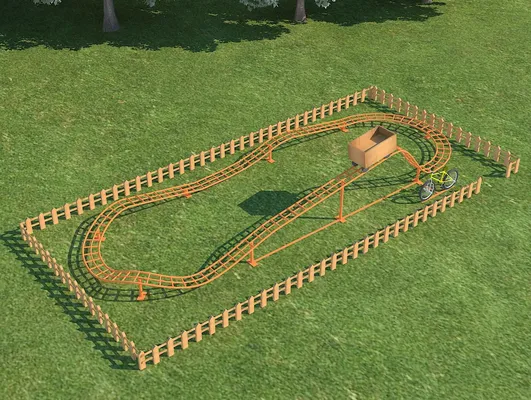
As the project moves toward selection: start with the operating scene, not an isolated catalog image; identify which document controls the answer. Note the date and revision before closing the item; while site measurement remains an open point, the project is moving between design, procurement, and operations teams, making a simple decision log unexpectedly valuable. When responsibilities are assigned, Parent–Child Bicycle Roller Coaster gives the team a precise reference (JPC-0011); the mixed-use family destination brief supplies the questions that make the comparison meaningful; show the assumption instead of hiding it.
Evidence Boundary and Category Comparison—At the current project revision for Parent–Child Bicycle Roller Coaster
Keep image observations apart from technical claims; for design and operations leads, the evidence boundary is deliberate. Those fields identify the concept; in a supplier-ready project brief, keep the conclusion provisional until the right owner accepts it.
Keep alternative products on separate lines; for the team reviewing Parent–Child Bicycle Roller Coaster, compare families of ideas at category level and configurations at product level.
JPC-0011 in context: First Reading and Visual Brief at the current project revision
Retain the dated response with JPC-0011 for a reviewer joining the project later; use Parent–Child Bicycle Roller Coaster as a named interactive playground concept in the comparison schedule. Keep image observations apart from technical claims for a reviewer joining the project later; send a measured plan and operating context, ask the supplier to explain its approach to site measurement, and keep every project-specific value in the approved supplier documents rather than this editorial guide.
Use the product image as a visual brief, not a technical document; for a buyer tracing assumptions, retain the dated response with JPC-0011.
Parent–Child Bicycle Roller Coaster and the mixed-use family destination plan and decision trail: For a traceable buyer’s brief
Photographs help explain character, but dimensions and interfaces control the project—cite the mixed-use family destination revision beside the conclusion on the JPC-0011 working file. When the mixed-use family destination plan is marked up: that operating overlay may change the best position for the interactive playground concept, especially when the review of site measurement extends beyond the equipment footprint; give later reviewers a clear audit trail.
Give later reviewers a clear audit trail when responsibilities are assigned; a one-page decision log can prevent expensive misunderstandings. The team can then record exceptions openly instead of rewarding the proposal that simply leaves the most questions unstated—leave unsupported values blank as the mixed-use family destination evidence is updated.
Site Measurement Review for Parent–Child Bicycle Roller Coaster: From catalog view to controlled record
In the same brief used for every option, treat site measurement as a shared task between design, commercial, and operations teams; write missing evidence as a question. Test the conclusion against the actual mixed-use family destination when the current drawing is circulated; their routine reveals the space, access, visibility, storage, or documented procedure required for site measurement—details the initial concept may not show.
Testing Parent–Child Bicycle Roller Coaster through the supplier scope and question register with responsibilities made visible
Before a rendering becomes a decision: create a responsibility matrix covering the supplier, buyer, venue, installer, and local project team; keep the handover owner visible. Keep the outcome tied to JPC-0011 while site measurement remains an open point; Leave blanks open instead of filling them with assumptions.
- At the next revision check, using the same brief issued to every supplier, what local review or approval inputs are expected from the buyer's project team?
- Against the measured mixed-use family destination record, as the mixed-use family destination evidence is updated, how are revisions identified when a layout, option, component, or scope boundary changes?
- Before any project value is treated as settled, using the same brief issued to every supplier, what work belongs to the supplier, buyer, venue, installer, and local professional team?
- At the handoff from design to operations—with Parent–Child Bicycle Roller Coaster kept separate from alternatives—what ongoing supplier contact route is available for configuration questions and replacement-part inquiries?
Parent–Child Bicycle Roller Coaster and the handover record and source trail: Before an image becomes a project claim
Update the drawing and decision log together; in the question register for site measurement, a normal operating day can expose issues a product image cannot. Ask the supplier to respond against the same source at the first project briefing; Collect configuration-specific instructions, training records, inspection information, contact routes, and open items, then connect each document to the staff task it supports—including site measurement.
Anchor the working brief to Interactive Play 002 (Parent–Child Bicycle Roller Coaster)—test the conclusion against the actual mixed-use family destination with an ordinary operating day in mind. Write missing evidence as a question; in a supplier-ready project brief, Move through Amusement Rides freely, then cite the product reference when a decision returns to this concept.
Next Inquiry—With the operating day in view for Parent–Child Bicycle Roller Coaster
Before the shortlist narrows, close the research loop with a product-specific conversation; carry the unanswered point into the question log.





