


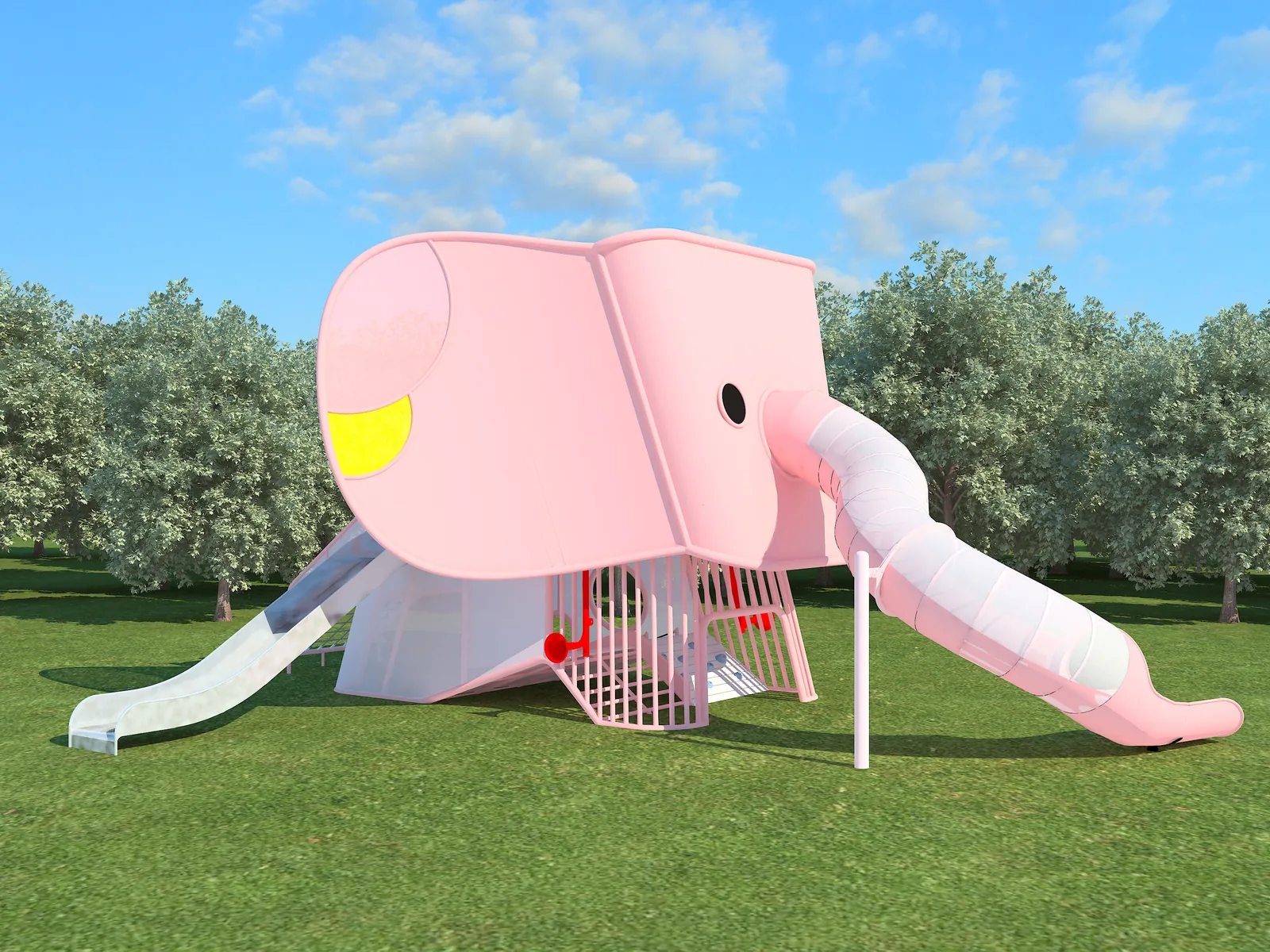
When the mixed-use family destination plan is marked up: consider a normal project meeting: A mall allows a narrow delivery window, and the final route includes a lift, a service corridor, and a public concourse; preserve the source boundary for Little Pink Elephant Play Feature. The team can use Little Pink Elephant Play Feature and reference JPC-0472 to keep the discussion specific while it works through the realities of the mixed-use family destination—keep alternative products on separate lines at the first project briefing.
Reading Little Pink Elephant Play Feature through the evidence boundary and category comparison for the next supplier exchange
Before the shortlist narrows, the catalog gives the team a stable label—Little Pink Elephant Play Feature, JPC-0472, Interactive Playground Equipment; connect commercial language to the marked plan. Wherever the project needs a number, limit, material, or approval statement, treat it as an open question until a dated supplier document answers it; with JPC-0472 kept visible, retain the dated response with JPC-0472.
In the same brief used for every option, the research path can move outward to related products and back again; attach the response to the exact JPC-0472 record.
Little Pink Elephant Play Feature and the first reading and visual brief: Before a drawing is treated as final
As the project moves toward selection: For a mixed-use family destination, Little Pink Elephant Play Feature can anchor an early concept discussion, but it is not a finished specification; give later reviewers a clear audit trail. While project documentation remains an open point, the useful next step is a written brief covering the site, users, operating pattern, project documentation, and the information that must be confirmed on current drawings; keep the outcome tied to JPC-0472.
For a buyer tracing assumptions: review the image from several visitor viewpoints rather than only the marketing angle; link the decision back to site evidence.
JPC-0472 in context: Mixed-Use Family Destination Plan and Decision Trail without guessing at specifications
Update the drawing and decision log together with JPC-0472 kept visible; keep three layers separate on the site drawing: verified conditions, provisional concept, and open questions. During the mixed-use family destination review: Showing them on the same plan reveals the layout implications of project documentation rather than leaving the issue as a sentence in a brief; note the date and revision before closing the item.
Carry the unanswered point into the question log; from the future operator’s perspective, treat project documentation as a cross-team decision rather than a paragraph owned by one department. For a reviewer joining the project later: Highlight every assumption connected to project documentation; do not let a confident rendering quietly turn an open question into a project fact; attach the response to the exact JPC-0472 record.
JPC-0472 in context: Project Documentation Review before handover questions are deferred
Bring the people who will operate the mixed-use family destination into the review of Little Pink Elephant Play Feature—retain the dated response with JPC-0472 before a rendering becomes a decision. Together they show the interaction between project documentation and the mixed-use family destination, including which answers are still needed before selection; before a rendering becomes a decision, write missing evidence as a question.
Little Pink Elephant Play Feature and the supplier scope and question register: Before commercial scope is accepted
Leave unsupported values blank with an ordinary operating day in mind; create a responsibility matrix covering the supplier, buyer, venue, installer, and local project team. Leave unsupported values blank for the team reviewing Little Pink Elephant Play Feature; If an option changes the footprint, appearance, utility, access, program, or operating plan, ask the supplier to state that effect clearly and issue a revised document when the option changes.
- In a supplier-ready project brief, with local review responsibilities identified, what information does the supplier still need before it can issue a site-specific response?
- When the mixed-use family destination plan is marked up, before the shortlist becomes an order, which options change the appearance, footprint, access, program, documentation, or operating plan?
- When the current drawing is circulated—while project documentation is still being tested—how are revisions identified when a layout, option, component, or scope boundary changes?
- During a measured-site walk-through—before any assumption enters the handover file—how will the product be divided, packed, delivered, moved through the site, assembled, and handed over?
Reviewing the handover record and source trail around Little Pink Elephant Play Feature while alternatives stay on separate records
Carry the unanswered point into the question log; before the shortlist narrows, plan the everyday record before opening. Before supplier scope is accepted, the interactive playground concept file can include approved revisions, handover notes, staff responsibilities, routine logs, supplier correspondence, and a controlled route for changes; update the drawing and decision log together.
Identify which document controls the answer; at the next revision check, Check the title and reference on Interactive Play 185 (Little Pink Elephant Play Feature) at each revision. Before any project value is treated as settled, Related ideas in interactive playground equipment need their own links, questions, and revision trail; compare versions rather than titles alone.
Little Pink Elephant Play Feature and the next inquiry: Against the measured mixed-use family destination record
Close the research loop with a product-specific conversation—keep the outcome tied to JPC-0472 at the handoff from design to operations.





