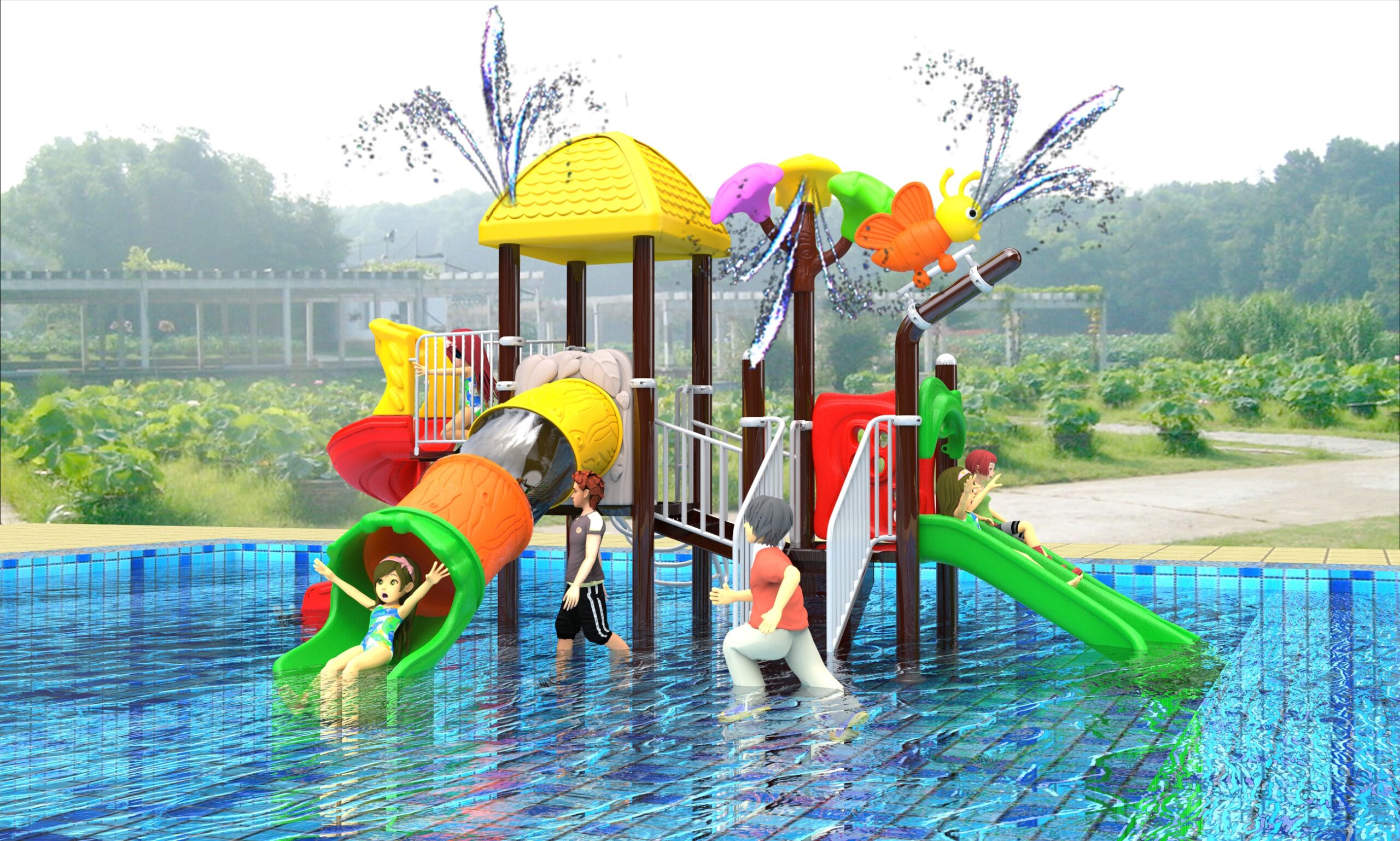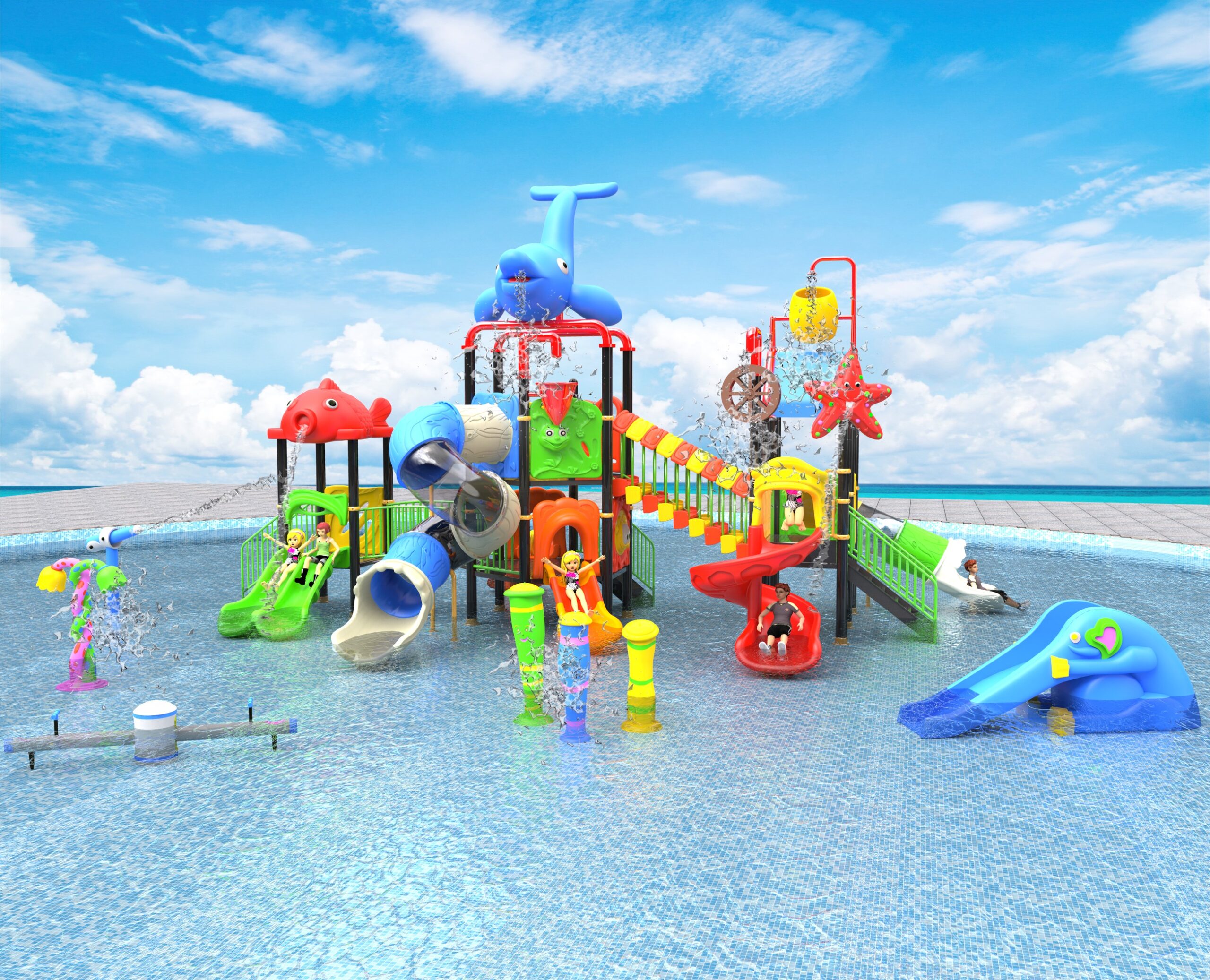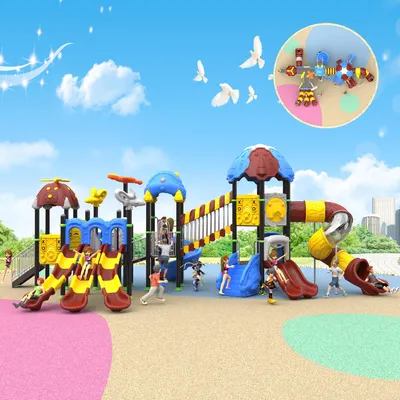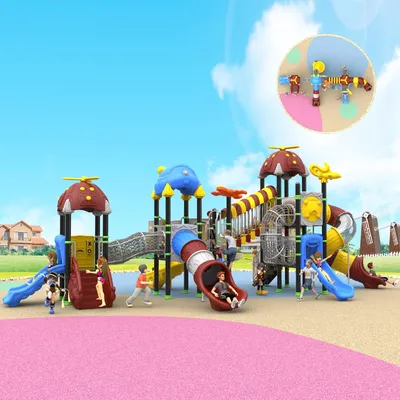


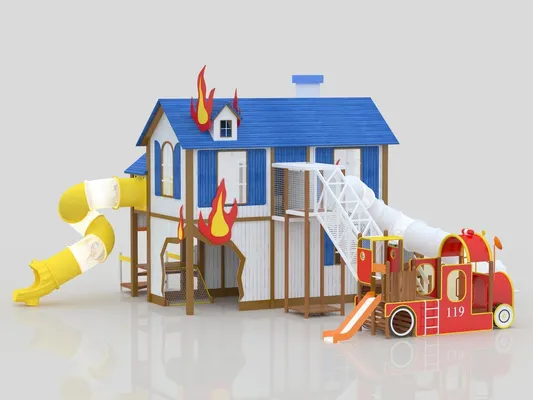
An interactive water play system should be planned as one guest journey rather than a loose collection of wet-play features. A resort water-play zone is more than a bright object beside a pool. It is a small guest journey with an approach, a first splash, choices of intensity, places to pause and an exit that should not conflict with arriving users. When slides, spray features, climbing platforms and tipping water are combined in one modular system, the layout has to coordinate play design with water treatment, drainage, surfaces and supervision.
The listed Fiberglass Interactive Playground is a customizable FRP-and-galvanized-steel water play system for resorts, water parks and public playgrounds. Its product data provides a useful functional outline but not a complete aquatic design. This guide shows how an owner can turn that outline into a disciplined project brief while leaving engineering, code review and operating rules to the qualified parties responsible for the actual site.
A project story: from empty space to purposeful play
Consider an illustrative family resort that wants to activate an underused lawn between the children’s pool and café. Guests range from hesitant toddlers to confident older children, and caregivers want seating that is close without being directly in spray. The design team imagines a welcoming low-intensity edge, a central interactive platform and a more energetic slide route. Those experience goals immediately create questions about water reach, wet circulation and separation from food service.
The modular features can support the concept, but each must be located in relation to hydraulics and operations. Spray drift, prevailing wind, sun, shade, drainage falls, slip-resistant surfacing, water depth if any, access and equipment-room connections all affect the plan. The product is one coordinated package in a larger aquatic system; it should not be designed independently from that system.
What the product data actually establishes
The following snapshot is limited to information supplied in the source catalog for this product. It is a useful briefing reference, not a substitute for the final quotation, technical drawings, manuals or local professional review.
- System type: Interactive water play system
- Materials: Fiberglass (FRP) and galvanized steel
- Listed features: Water slides, splash zones, water guns, sprays, climbing platforms and tipping buckets
- Layout: Customized to project area
- Applications: Water parks, resorts and public playgrounds
Before relying on any figure, ask the supplier to connect it to the exact configuration being quoted. Custom colors, modules, dimensions or options can change the project interfaces. Keeping the approved product schedule, drawings and operating documents together also helps designers, installers and the future operations team work from the same information.
Plan the experience before fixing the layout
Write the guest sequence before choosing the visual theme. Identify where users change, rinse if required, enter the activity area, encounter low and higher intensity features, and reunite with caregivers. Keep dry access from becoming an accidental wet route. If the project includes tipping buckets or water guns, study their reach and timing so quieter zones and circulation are not unexpectedly soaked.
Then build an interface schedule. For every supplied element, list structural support, water supply, flow and pressure needs, drainage, electrical needs if applicable, controls, access for maintenance and winter or seasonal procedures. The product page describes fiberglass components and a galvanized steel support structure, but the actual engineer needs model-specific loads and connection data. Agree which party designs and warrants each interface contractually.
Buyer questions that improve the project brief
A useful inquiry explains the site and intended operation instead of asking only for a price. Send measurements, photographs, user groups, preferred activities, opening context and known constraints. Then use the answers below as documented decision points. Any limit or technical requirement should come from the final product package and the professionals responsible for the actual site.
- Request a dimensioned layout and feature schedule for the exact customized configuration.
- Obtain structural loads, support details and all hydraulic and electrical interface requirements.
- Clarify water-source, treatment, recirculation and drainage responsibilities with the project engineers.
- Ask how individual slides, sprays, guns and tipping elements can be isolated for maintenance.
- Review materials, finishes, access points and replacement-part availability for the operating climate.
- Define installation supervision, testing, commissioning, training and handover-document deliverables.
Installation, handover and everyday operation
Commissioning should test more than whether water appears. Observe flows at each feature, drainage performance, spray boundaries, controls, shutdowns, access and the guest routes created when several families use the system. Record the accepted settings and create an inspection baseline. Site-specific water quality and public-health procedures must come from applicable requirements and qualified aquatic professionals.
For daily operation, divide checks into water-system, structural, surface and guest-management categories. Staff should know how to isolate a feature, whom to contact for defects and how to document closures. Build cleaning and maintenance access into the layout; a beautiful platform that cannot be reached without disrupting the whole zone will be difficult to manage during a busy resort day.
Keep a controlled record of revisions from first concept through handover. At completion, reconcile the installed equipment with the approved component schedule and collect the documents, training records and contact routes that the operating team will need. This is also the right time to confirm which changes require supplier input rather than an improvised local modification.
For broader project research, explore our interactive playground equipment collection and the related interactive playground project guide.
Frequently asked questions
Is this a splash pad or a water-play structure?
The listing calls it an interactive water play system and describes slides, platforms, sprays, water guns and tipping elements. The final configuration and site design determine how it functions within the broader aquatic facility.
Can adults use it?
The product data lists children and adults generally, but that does not establish eligibility for every component. Obtain limits and rules for the exact design and have them reviewed for the intended venue.
Does the equipment include the complete water-treatment system?
The catalog text does not establish that. Ask for a supply boundary identifying every included component and every site-provided hydraulic, treatment, drainage and electrical item.
Can the theme and colors be customized?
Customization is listed. Coordinate visual decisions with finish suitability, visibility, maintenance and the resort’s existing wayfinding rather than treating color as an isolated selection.
Discuss the exact product for your site
Review the exact Fiberglass Interactive Water Play System page, then share a surveyed site plan and project brief so the equipment layout can be discussed alongside the resort’s structural, hydraulic and operating requirements. View Fiberglass Interactive Playground Equipment 100kg–500kg Commercial Water Park Play System.