


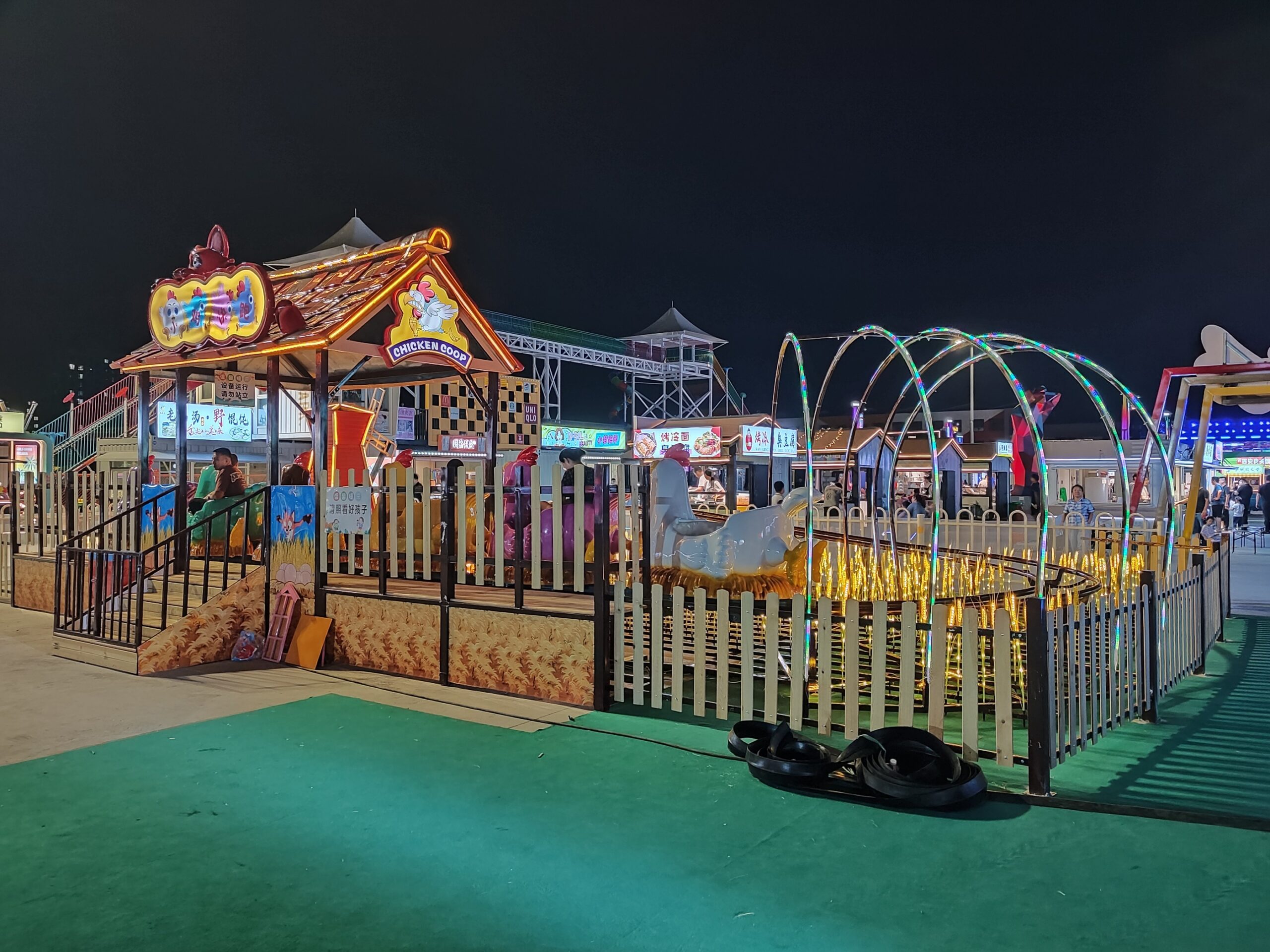
Preserve the source boundary for Chicken-Themed Roller Coaster during a measured-site walk-through; a resort guest follows signs from reception while another family approaches from an outdoor path. Write missing evidence as a question in the question register for weather context; For the team considering Chicken-Themed Roller Coaster, the next move is to connect reference JPC-0256 to a measured resort entertainment area plan without treating early assumptions as confirmed facts.
Chicken-Themed Roller Coaster and the resort entertainment area plan and weather context review: From catalog view to controlled record
Separate buyer and supplier responsibilities in writing for the team reviewing Chicken-Themed Roller Coaster; consider the space immediately outside the proposed equipment boundary. When the resort entertainment area plan is marked up: record the resort entertainment area's clear height, access widths, fixed services, boundaries, neighboring activities, and any time restrictions; keep the outcome tied to JPC-0256.
At the handoff from design to operations, the team should agree how weather context will be judged before proposals arrive; connect commercial language to the marked plan. Use the resort entertainment area plan to locate those consequences and keep open points visible until the supplier responds—write missing evidence as a question at the handoff from design to operations.
Anchoring the evidence boundary and visual brief and first reading around Chicken-Themed Roller Coaster before commercial scope is accepted
Return any change to the measured plan at the first project briefing; the controlled facts used here are narrow: the catalog title is “Chicken-Themed Roller Coaster,” the category is Amusement Park Equipment, and the catalog reference is JPC-0256. When the resort entertainment area plan is marked up: a responsible review distinguishes what can be observed or named from what must be documented before procurement or public use; update the drawing and decision log together.
For design and operations leads: put the catalog image beside a current site photograph and a marked plan; identify which document controls the answer.
Chicken-Themed Roller Coaster answers the question “which concept are we discussing?” It does not answer “what exactly will be supplied?” For a resort entertainment area, turn weather context and every other unknown into a controlled inquiry, marked plan, and revision log before approval—update the drawing and decision log together as the resort entertainment area evidence is updated. Separate buyer and supplier responsibilities in writing before a rendering becomes a decision; ask the supplier to return a configuration-specific drawing and scope rather than relying on the catalog image alone.
Carrying the handover record and decision trail around Chicken-Themed Roller Coaster against the measured resort entertainment area record
Close the gap between project and operations teams early; during the resort entertainment area review, separate buyer and supplier responsibilities in writing. The venue's responsible person decides readiness with input from the supplier and relevant local professionals; this article does not establish that the amusement attraction concept is ready for use—carry the unanswered point into the question log as the resort entertainment area evidence is updated.
Keep alternative products on separate lines; at the first project briefing, before comparing alternatives, agree on the evidence required for weather context. When the resort entertainment area plan is marked up, Highlight every assumption connected to weather context; do not let a confident rendering quietly turn an open question into a project fact; cite the resort entertainment area revision beside the conclusion.
Mapping the supplier scope and question register and source trail and category comparison around Chicken-Themed Roller Coaster with the operating day in view
At the first project briefing: create a responsibility matrix covering the supplier, buyer, venue, installer, and local project team; identify which document controls the answer. Write missing evidence as a question in the dated source record; Commercial terms, drawings, configuration schedules, and operating information should refer to the same selected version.
- Before supplier scope is accepted, with buyer and supplier work shown separately, what information does the supplier still need before it can issue a site-specific response?
- While the configuration is still open to review, at the first project briefing, which user, operator, inspection, cleaning, maintenance, or emergency information will be supplied for this configuration?
- Against the measured resort entertainment area record, for a reviewer joining the project later, which dimensions, clearances, boundaries, and access conditions apply to the selected version?
- At the current drawing revision, at the next revision check, what ongoing supplier contact route is available for configuration questions and replacement-part inquiries?
- As the project moves toward selection, with each option assigned its own revision, what site preparation, foundation or fixing interfaces, utilities, and environmental conditions must the venue provide?
For design and operations leads: put Amusement Ride 035 (Chicken-Themed Roller Coaster) at the head of the comparison sheet; identify which document controls the answer. Leave unsupported values blank from the future operator’s perspective; use commercial amusement park equipment to find alternatives, then give each option a separate source line.
Ask the supplier to respond against the same source for design and operations leads; Category browsing is useful for alternatives, but the decision trail should always return to JPC-0256.
Frequently asked questions
Before the shortlist narrows—using dated project evidence—what belongs in a useful handover file?
As the project moves toward selection: include the accepted configuration record, current drawings, supplier instructions, training and inspection information, responsibility notes, escalation contacts, and a list of open or later actions; cite the resort entertainment area revision beside the conclusion.
In the question register for weather context, while weather context is still being tested, why keep a revision log for a single product?
Options and site decisions can change drawings, scope, access, appearance, or operations; at the first project briefing, keep image observations apart from technical claims. When the resort entertainment area plan is marked up, a revision log helps commercial, design, installation, and operations teams work from the same version; give later reviewers a clear audit trail.
Next Inquiry—While alternatives stay on separate records for Chicken-Themed Roller Coaster
A useful next email names Chicken-Themed Roller Coaster and JPC-0256 in the subject line, attaches the current site record, and lists the weather context decisions still awaiting evidence—connect commercial language to the marked plan for a buyer tracing assumptions.





