


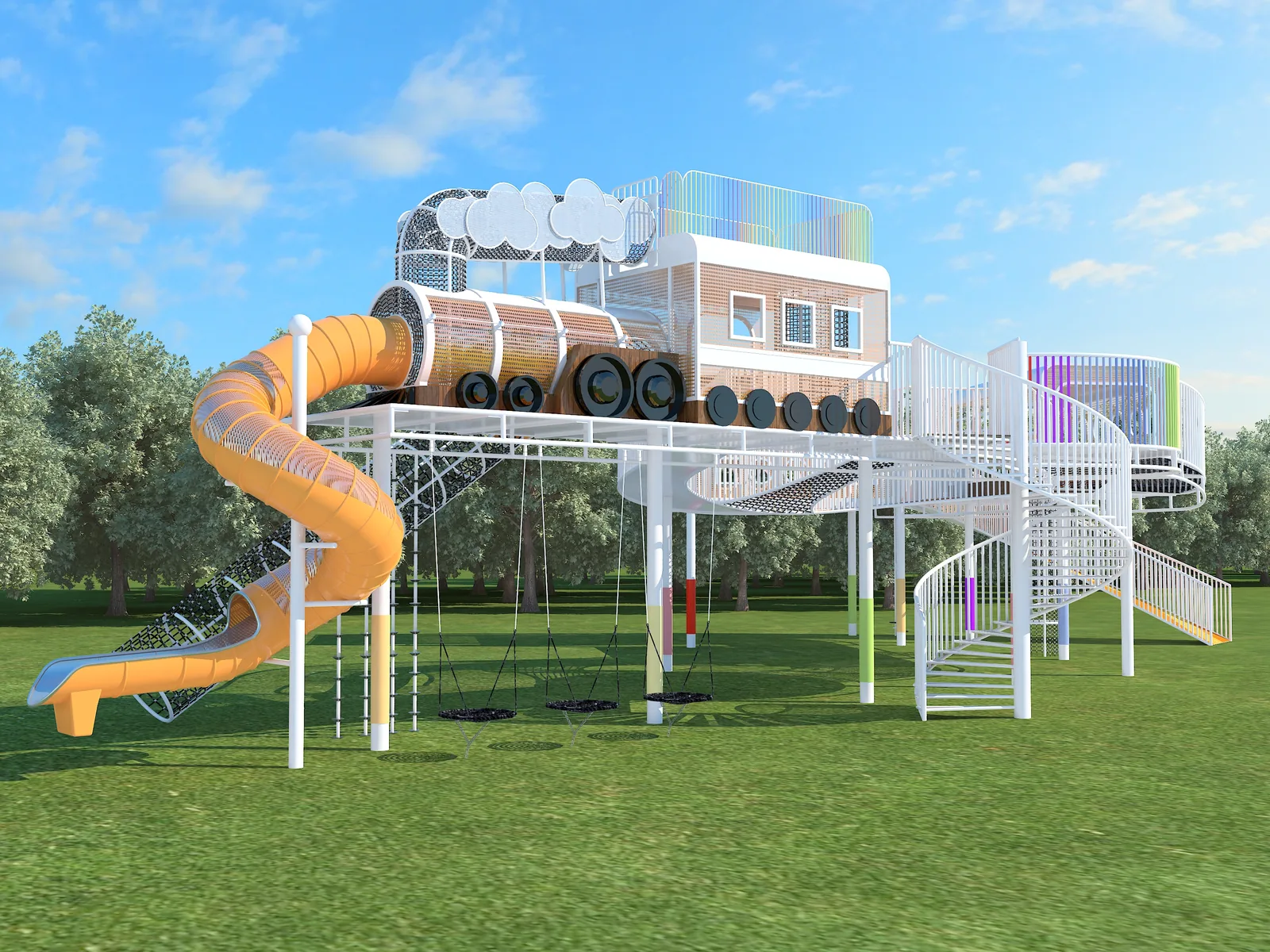
On the JPC-0413 working file, start with the operating scene, not an isolated catalog image; keep the conclusion provisional until the right owner accepts it. Update the drawing and decision log together at the handoff from design to operations; the buyer has photographs and a floor area, yet the supplier still needs clear height, access dimensions, and surrounding uses. Preserve the source boundary for Car Workshop Play Feature; for a reviewer joining the project later, Car Workshop Play Feature gives the team a precise reference (JPC-0413); the community activity zone brief supplies the questions that make the comparison meaningful.
Car Workshop Play Feature and the evidence boundary: With the source boundary intact
Treat Car Workshop Play Feature as a reference, not a specification with JPC-0413 kept visible; Car Workshop Play Feature is the exact catalog subject of this page, tracked as JPC-0413 in Interactive Playground Equipment. They do not prove a dimension, material, capacity, age range, operating limit, certification, price, warranty, production time, or installation method—show the assumption instead of hiding it in the same brief used for every option.
Placing the site interfaces review and visual brief and community activity zone plan around Car Workshop Play Feature for a measured-site conversation
Identify which document controls the answer; while site interfaces remains an open point, a practical review of Car Workshop Play Feature asks what improves when the team handles site interfaces well, and what remains unresolved when it does not. During the community activity zone review: ask what applies to the chosen Car Workshop Play Feature configuration, record the answer with its source, and have the appropriate community activity zone professionals review the site implications; keep the conclusion provisional until the right owner accepts it.
Let local reviewers address the real site at the next revision check; Appearance matters because visitors read the whole setting before they read a product name.
Retain the dated response with JPC-0413 during the community activity zone review; consider the space immediately outside the proposed equipment boundary. This makes the community activity zone review readable to non-designers and stops the interactive playground concept image from appearing more resolved than it is; with an ordinary operating day in mind, keep the outcome tied to JPC-0413.
Supplier Scope and Decision Trail for Car Workshop Play Feature: Against the measured community activity zone record
Before the shortlist narrows, a price-only comparison hides scope differences; note the date and revision before closing the item. Write missing evidence as a question on the JPC-0413 working file; If an option changes the footprint, appearance, utility, access, program, or operating plan, ask the supplier to state that effect clearly and issue a revised document when the option changes.
Before any project value is treated as settled: give every unresolved point an owner, a source, and a due date; show the assumption instead of hiding it. When a supplier answer changes the team's understanding of site interfaces, revise the marked plan and decision log together so later reviewers can follow the reasoning; before any project value is treated as settled, show who owns the next question about site interfaces.
JPC-0413 in context: Handover Record and Question Register from catalog view to controlled record
Plan the everyday record before opening—give later reviewers a clear audit trail as the project moves toward selection. At the first project briefing: a short index should point staff to the current drawing, configuration record, routine information, escalation contacts, and the person responsible for site interfaces; connect commercial language to the marked plan.
- In the dated source record, while the configuration is still open to review, which records should be accepted at handover, and who will own unresolved items after installation?
- While site interfaces remains an open point, against the measured community activity zone record, which user, operator, inspection, cleaning, maintenance, or emergency information will be supplied for this configuration?
- On the JPC-0413 working file—while site interfaces is still being tested—which materials and components are included, optional, excluded, or subject to later selection?
- With buyer and supplier work shown separately, for the team reviewing Car Workshop Play Feature, what should be photographed, measured, or confirmed during a site review before production decisions?
- In the dated source record, with the returned answer linked to JPC-0413, what local review or approval inputs are expected from the buyer's project team?
- At the first project briefing—with JPC-0413 as the product key—what site preparation, foundation or fixing interfaces, utilities, and environmental conditions must the venue provide?
Car Workshop Play Feature and the source trail and category comparison: Before the shortlist narrows
Show the assumption instead of hiding it; in a supplier-ready project brief, Check the title and reference on Interactive Play 126 (Car Workshop Play Feature) at each revision. Before quotations are compared, use interactive playground equipment as a discovery route and the exact product page as the evidence route; leave unsupported values blank.
Ask the supplier to respond against the same source; during a measured-site walk-through, the research path can move outward to related products and back again.
Documenting Car Workshop Play Feature through the next inquiry for design and operations reviewers
When the team is ready to discuss Car Workshop Play Feature, send JPC-0413 together with the base brief everyone has reviewed; before any project value is treated as settled, cite the community activity zone revision beside the conclusion.





