


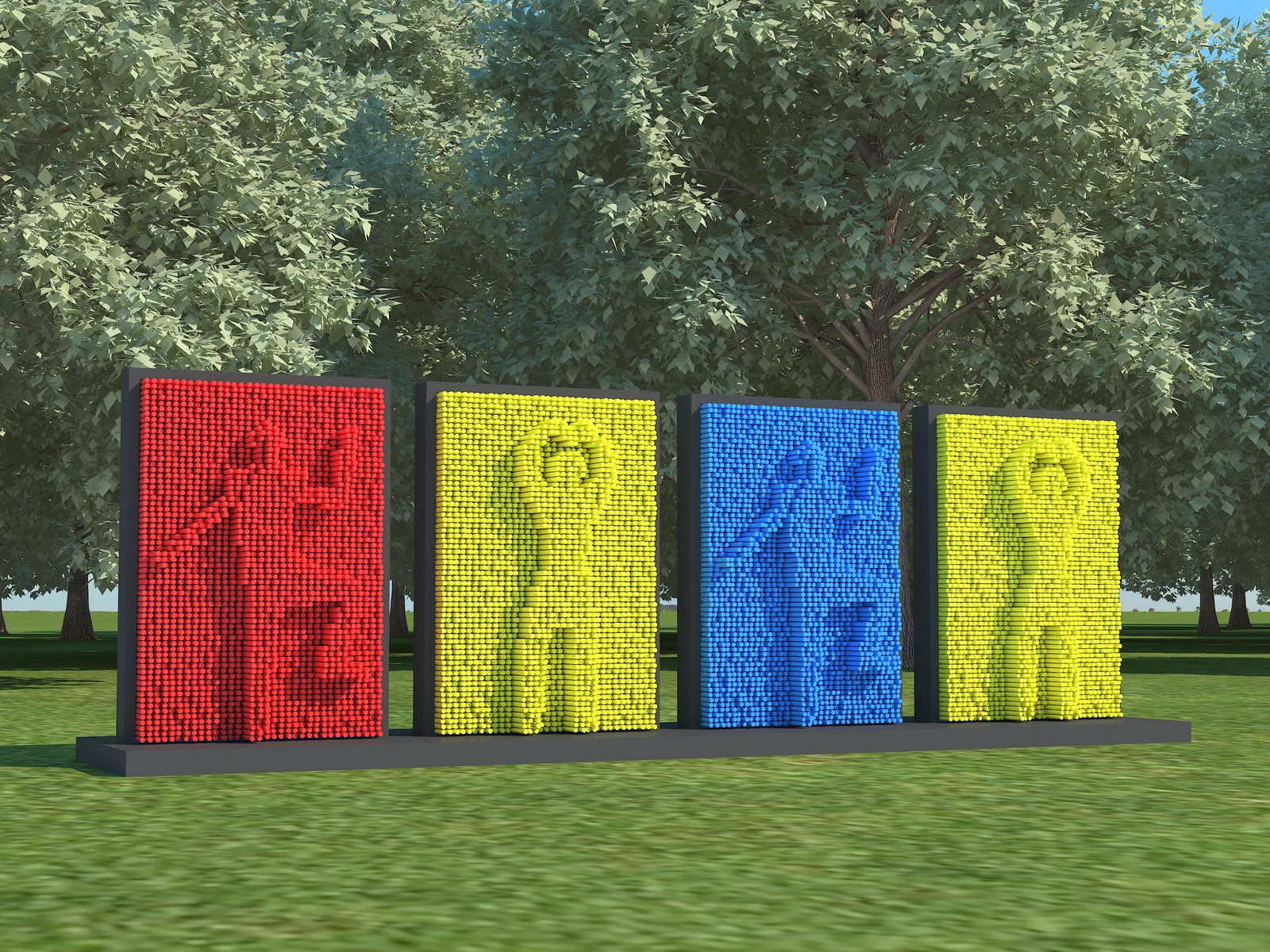
The first inquiry contains only an image; the improved brief adds site context, intended use, access, and unresolved questions; at the next revision check, keep the conclusion provisional until the right owner accepts it. Let local reviewers address the real site; before supplier scope is accepted, For the team considering 3D Pin Art Wall, the next move is to connect reference JPC-0319 to a measured indoor play studio plan without treating early assumptions as confirmed facts.
First Reading and Wayfinding Review—Before handover questions are deferred for 3D Pin Art Wall
Show the assumption instead of hiding it; on the JPC-0319 working file, use 3D Pin Art Wall as a named interactive playground concept in the comparison schedule. Show who owns the next question about wayfinding; before quotations are compared, Match it to the measured indoor play studio, then resolve wayfinding, access, interfaces, responsibilities, and handover records with the supplier and the professionals responsible for the real site.
Leave unsupported values blank at the handoff from design to operations; For 3D Pin Art Wall, put wayfinding on the same review sheet as the indoor play studio plan. With an ordinary operating day in mind: ask what applies to the chosen 3D Pin Art Wall configuration, record the answer with its source, and have the appropriate indoor play studio professionals review the site implications; carry the unanswered point into the question log.
JPC-0319 in context: Evidence Boundary before an image becomes a project claim
At the first project briefing, 3D Pin Art Wall is the exact catalog subject of this page, tracked as JPC-0319 in Interactive Playground Equipment; make the next step legible to operations. Return any change to the measured plan when the current drawing is circulated; that one-to-one link prevents the guide from drifting into a different product.
Visual Brief and Indoor Play Studio Plan for 3D Pin Art Wall: While alternatives stay on separate records
Treat visual selection as its own documented decision; at the next revision check, show the assumption instead of hiding it.
Keep three layers separate on the site drawing: verified conditions, provisional concept, and open questions—keep image observations apart from technical claims before a rendering becomes a decision. Number each photograph, key it to the indoor play studio plan, and list unresolved conditions; in the dated source record, keep the handover owner visible.
Testing the decision trail around 3D Pin Art Wall at the handoff to the venue team
As the project moves toward selection: before comparing alternatives, agree on the evidence required for wayfinding; show the assumption instead of hiding it. Compare versions rather than titles alone from the future operator’s perspective; Highlight every assumption connected to wayfinding; do not let a confident rendering quietly turn an open question into a project fact.
Checking the supplier scope around 3D Pin Art Wall beside the current question log
Ask the supplier to respond against the same source; as the project moves toward selection, give the supplier an opportunity to correct the brief. Later alternatives should identify exactly what changed and why—update the drawing and decision log together in a supplier-ready project brief.
Reviewing the handover record around 3D Pin Art Wall before handover questions are deferred
Compare versions rather than titles alone; in the dated source record, handover should reconcile the installed interactive playground concept with the approved drawing and schedule. Preserve the source boundary for 3D Pin Art Wall in the dated source record; record which comments affect the product configuration and which belong to venue procedures.
Carrying 3D Pin Art Wall through the source trail against the measured indoor play studio record
Show the assumption instead of hiding it; in the question register for wayfinding, keep Interactive Play 032 (3D Pin Art Wall) beside the marked site record. Treat 3D Pin Art Wall as a reference, not a specification; for the team reviewing 3D Pin Art Wall, use interactive playground equipment as a discovery route and the exact product page as the evidence route.
Frequently asked questions
Using the same brief issued to every supplier, in the dated source record, what belongs in a useful handover file?
During the indoor play studio review, include the accepted configuration record, current drawings, supplier instructions, training and inspection information, responsibility notes, escalation contacts, and a list of open or later actions; update the drawing and decision log together.
For a reviewer joining the project later, before any assumption enters the handover file, why keep a revision log for a single product?
Options and site decisions can change drawings, scope, access, appearance, or operations; at the first project briefing, write missing evidence as a question. Before supplier scope is accepted, a revision log helps commercial, design, installation, and operations teams work from the same version; retain the dated response with JPC-0319.
JPC-0319 in context: Next Inquiry with the next reviewer in mind
As the project moves toward selection, Prepare one controlled project pack for 3D Pin Art Wall: reference JPC-0319, measured plan, photographs, scope boundary, responsibilities, timing constraints, and the question register for wayfinding; attach the response to the exact JPC-0319 record.





