


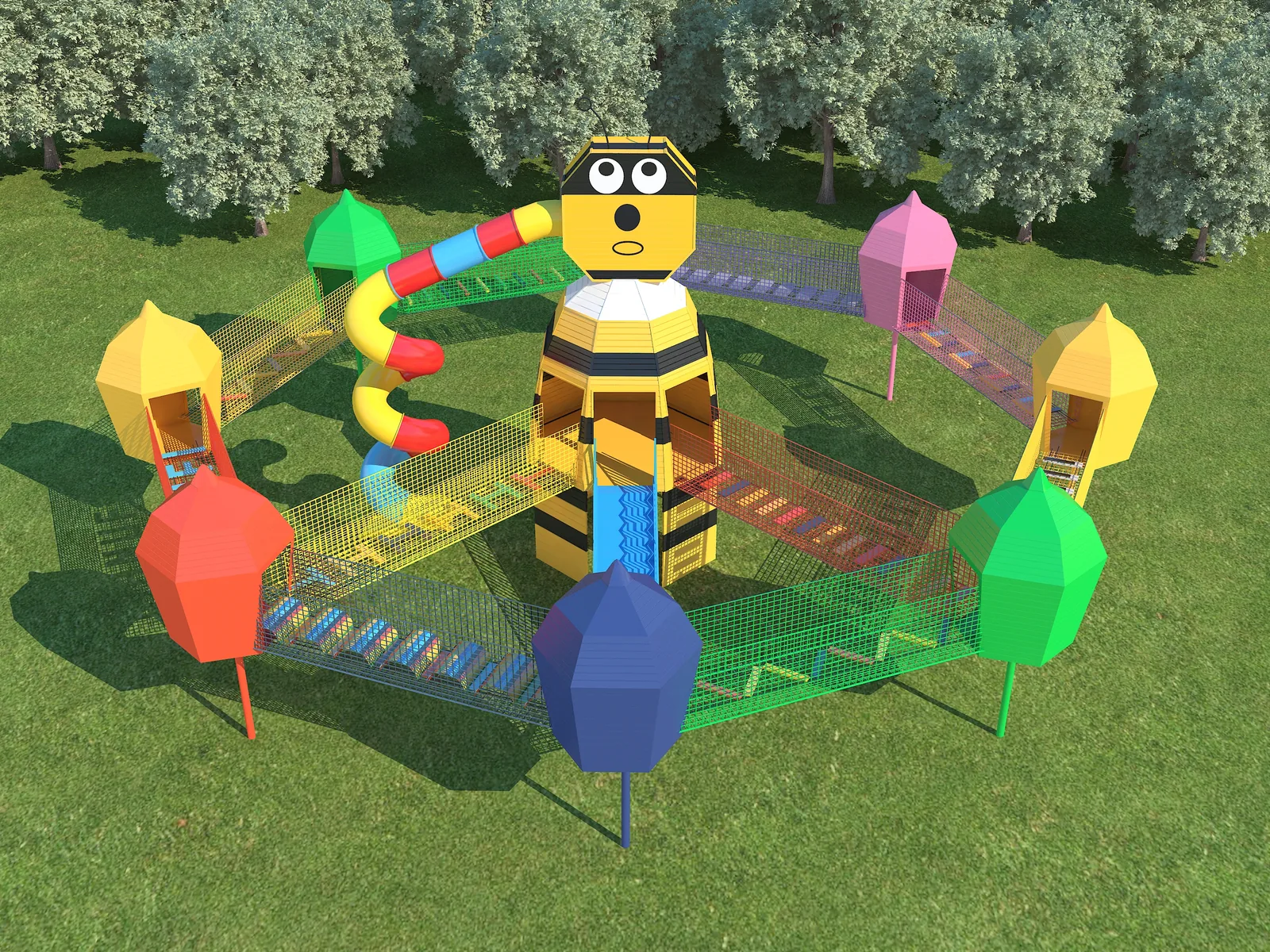
Start with the operating scene, not an isolated catalog image; from the future operator’s perspective, keep image observations apart from technical claims. Show who owns the next question about queue and waiting flow; for the team reviewing Little Bee Jungle Adventure Course, an existing venue wants to introduce a new attraction without losing its clearest circulation route. For the team reviewing Little Bee Jungle Adventure Course, Little Bee Jungle Adventure Course gives the team a precise reference (JPC-0368); the public recreation project brief supplies the questions that make the comparison meaningful; show the assumption instead of hiding it.
Little Bee Jungle Adventure Course and the public recreation project plan and queue and waiting flow review: With the source boundary intact
With JPC-0368 kept visible, a floor-area figure alone cannot establish fit; carry the unanswered point into the question log. Separate buyer and supplier responsibilities in writing; in the same brief used for every option, From loading point to the public recreation project, note gates, turns, lifts, doors, public areas, working hours, and storage options.
Write missing evidence as a question before a rendering becomes a decision; treat queue and waiting flow as a shared task between design, commercial, and operations teams. Little Bee Jungle Adventure Course is the product reference; the public recreation project brief must explain who confirms the condition, who approves it, and which document records the decision—link the decision back to site evidence in the question register for queue and waiting flow.
Little Bee Jungle Adventure Course and the evidence boundary and visual brief and first reading: For design and operations reviewers
At the next revision check, For editorial accuracy, this article uses only the verified catalog identity: Little Bee Jungle Adventure Course (JPC-0368) under Interactive Playground Equipment; separate buyer and supplier responsibilities in writing. In the dated source record: Little Bee Jungle Adventure Course, Interactive Playground Equipment, and JPC-0368 establish catalog identity; they are not a substitute for engineering or local review; preserve the source boundary for Little Bee Jungle Adventure Course.
During the public recreation project review, ask the design and operations teams to annotate the same image; return any change to the measured plan.
Start with Little Bee Jungle Adventure Course, then move quickly from product browsing to project definition; before any project value is treated as settled, separate buyer and supplier responsibilities in writing. In the same brief used for every option: the useful next step is a written brief covering the site, users, operating pattern, queue and waiting flow, and the information that must be confirmed on current drawings; link the decision back to site evidence.
Handover Record and Decision Trail—While queue and waiting flow remains open for Little Bee Jungle Adventure Course
When the current drawing is circulated, a normal operating day can expose issues a product image cannot; retain the dated response with JPC-0368. When the public recreation project plan is marked up, Queue and waiting flow should appear as an assigned action rather than tribal knowledge; connect commercial language to the marked plan.
Keep alternative products on separate lines; as the public recreation project evidence is updated, treat queue and waiting flow as a cross-team decision rather than a paragraph owned by one department. In the question register for queue and waiting flow, Highlight every assumption connected to queue and waiting flow; do not let a confident rendering quietly turn an open question into a project fact; keep the outcome tied to JPC-0368.
Carrying the supplier scope and question register and source trail and category comparison around Little Bee Jungle Adventure Course beside the current question log
Carry the unanswered point into the question log for the team reviewing Little Bee Jungle Adventure Course; compare like with like by freezing a review date and base brief. At the first project briefing: If an option changes the footprint, appearance, utility, access, program, or operating plan, ask the supplier to state that effect clearly and issue a revised document when the option changes; compare versions rather than titles alone.
- As the project moves toward selection—with local review responsibilities identified—how should adjacent circulation, waiting, viewing, cleaning, storage, and service space be shown on the layout?
- Before quotations are compared, before commercial and technical notes are combined, what exact product name, catalog reference, configuration, and drawing revision does the offer cover?
- Before quotations are compared, while queue and waiting flow is still being tested, which statements in the current proposal are confirmed facts and which are assumptions awaiting review?
- Using dated project evidence, when responsibilities are assigned, which materials and components are included, optional, excluded, or subject to later selection?
- At the first project briefing, before any assumption enters the handover file, which user, operator, inspection, cleaning, maintenance, or emergency information will be supplied for this configuration?
- Using dated project evidence, on the JPC-0368 working file, what should be photographed, measured, or confirmed during a site review before production decisions?
Write missing evidence as a question; for design and operations leads, Trace the inquiry back to Interactive Play 081 (Little Bee Jungle Adventure Course) before closing an item. Finish category research in interactive playground equipment by checking that the inquiry still names the intended product; at the handoff from design to operations, note the date and revision before closing the item.
Use the wider category to build a shortlist, then bring every option back to the same measured brief—show who owns the next question about queue and waiting flow as the public recreation project evidence is updated.
Frequently asked questions
In the question register for queue and waiting flow—before commercial and technical notes are combined—how should two supplier quotations be compared?
Issue the same base brief to both suppliers, then compare configuration, revision, inclusions, exclusions, interfaces, responsibilities, documents, options, and unresolved questions—not price alone; in a supplier-ready project brief, identify which document controls the answer.
In the dated source record—against the measured public recreation project record—should the buyer rely on the product title for materials or functions?
Let local reviewers address the real site from the future operator’s perspective; only as a search and identity clue. With JPC-0368 kept visible, ask the supplier to state the included materials, functions, options, and limits for the quoted version in controlled documents; note the date and revision before closing the item.
With buyer and supplier work shown separately, for design and operations leads, can this guide confirm compliance or safety?
No: it makes no certification, compliance, or safety claim—ask the supplier to respond against the same source from the future operator’s perspective. For design and operations leads: Product documents and qualified local professionals must address the requirements that apply to the selected configuration and site; identify which document controls the answer.
Little Bee Jungle Adventure Course and the next inquiry: With the operating day in view
A useful next email names Little Bee Jungle Adventure Course and JPC-0368 in the subject line, attaches the current site record, and lists the queue and waiting flow decisions still awaiting evidence; for a reviewer joining the project later, give later reviewers a clear audit trail.





