


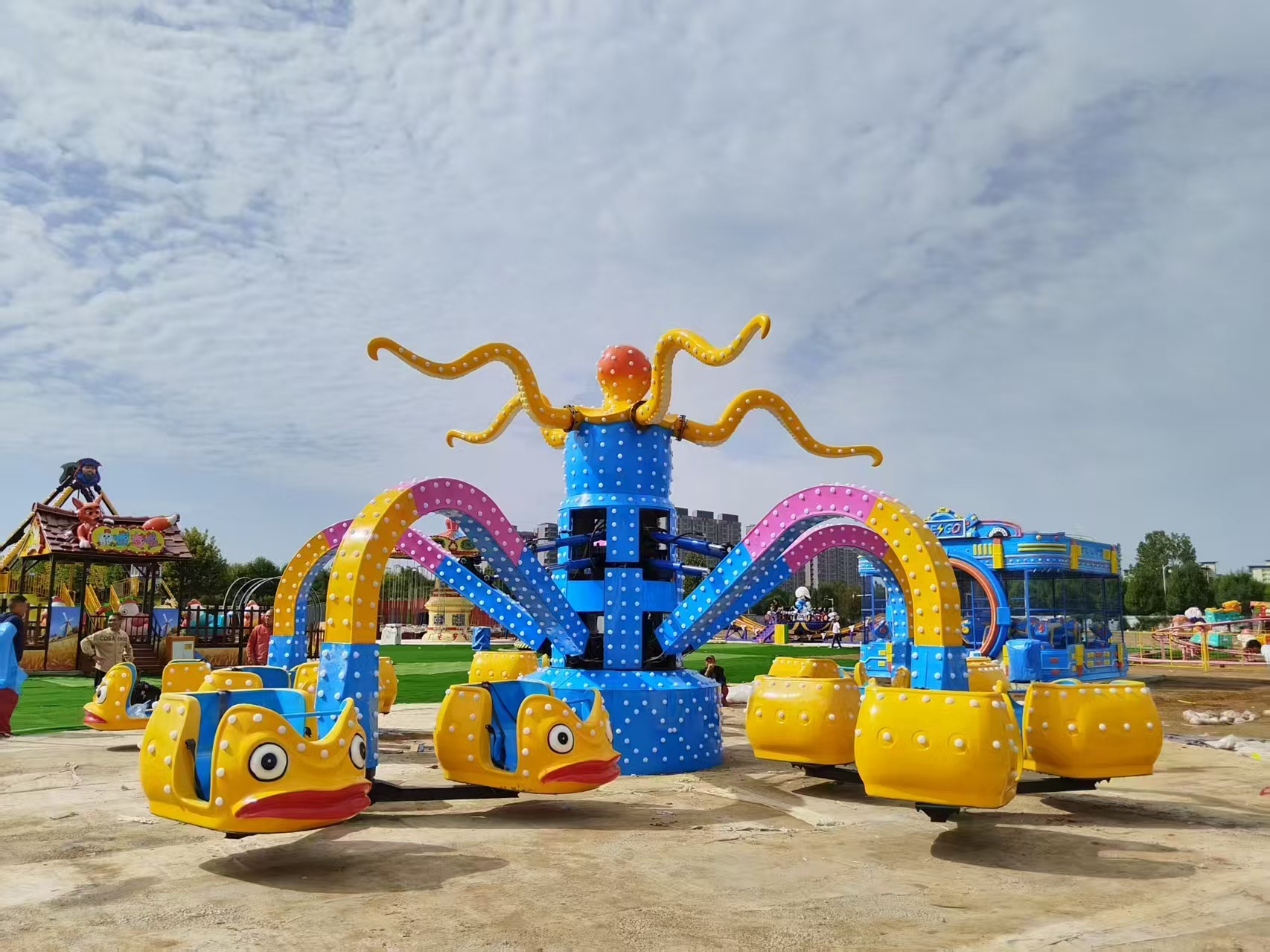
In the question register for concept review: a resort guest follows signs from reception while another family approaches from an outdoor path; cite the shopping mall attraction zone revision beside the conclusion. The product conversation becomes more useful when the team names Flying Octopus, records JPC-0222, and asks how the concept relates to the actual shopping mall attraction zone—attach the response to the exact JPC-0222 record when the current drawing is circulated.
Placing the first reading and shopping mall attraction zone plan around Flying Octopus at the current project revision
When responsibilities are assigned: Flying Octopus answers the question “which concept are we discussing?” It does not answer “what exactly will be supplied?” For a shopping mall attraction zone, turn concept review and every other unknown into a controlled inquiry, marked plan, and revision log before approval; compare versions rather than titles alone. Dimensions, materials, limits, utilities, installation details, and local requirements still need written confirmation for the selected version—show who owns the next question about concept review for design and operations leads.
Keep the handover owner visible; for a buyer tracing assumptions, a floor-area figure alone cannot establish fit. Mark usable boundaries, level changes, doors, columns, overhead constraints, routes, and adjacent functions—update the drawing and decision log together for the team reviewing Flying Octopus.
Visual Brief for Flying Octopus: At the current project revision
Before the shortlist narrows, ask the design and operations teams to annotate the same image; write missing evidence as a question.
Concept Review Review and Question Register for Flying Octopus: For a measured-site conversation
Before a rendering becomes a decision, do not solve concept review with an invented dimension or generic rule; leave unsupported values blank. Compare versions rather than titles alone; in the question register for concept review, use the shopping mall attraction zone plan to locate those consequences and keep open points visible until the supplier responds.
- While the configuration is still open to review, before a rendering becomes a decision, what should be photographed, measured, or confirmed during a site review before production decisions?
- For design and operations leads, with unresolved points left visible, how will the product be divided, packed, delivered, moved through the site, assembled, and handed over?
- With the returned answer linked to JPC-0222, for design and operations leads, which materials and components are included, optional, excluded, or subject to later selection?
- Before quotations are compared, with the returned answer linked to JPC-0222, how are revisions identified when a layout, option, component, or scope boundary changes?
- Using the same brief issued to every supplier, when responsibilities are assigned, how should adjacent circulation, waiting, viewing, cleaning, storage, and service space be shown on the layout?
- For the team reviewing Flying Octopus—with each option assigned its own revision—which dimensions, clearances, boundaries, and access conditions apply to the selected version?
JPC-0222 in context: Evidence Boundary and Decision Trail for a traceable buyer’s brief
The controlled facts used here are narrow: the catalog title is “Flying Octopus,” the category is Amusement Park Equipment, and the catalog reference is JPC-0222—keep image observations apart from technical claims before a rendering becomes a decision. Keep alternative products on separate lines; on the JPC-0222 working file, Flying Octopus, Amusement Park Equipment, and JPC-0222 establish catalog identity; they are not a substitute for engineering or local review.
Treat Flying Octopus as a reference, not a specification during a measured-site walk-through; use a short question register beside the plan. Attach the response to the exact JPC-0222 record; for design and operations leads, the team can then record exceptions openly instead of rewarding the proposal that simply leaves the most questions unstated.
Flying Octopus and the supplier scope and handover record: While concept review remains open
Before any project value is treated as settled, send every shortlisted supplier the same plan, photographs, intended use, access record, schedule, and question list; update the drawing and decision log together. With JPC-0222 kept visible: record the answers before using the proposal as the basis for other design work; give later reviewers a clear audit trail.
Keep image observations apart from technical claims; when responsibilities are assigned, make the handover usable on a busy day. While concept review remains an open point, before approving the amusement attraction concept, let staff comment on concept review, access, storage, observation, cleaning, and handover needs; retain the dated response with JPC-0222.
Source Trail and Category Comparison for Flying Octopus: Before a drawing is treated as final
During the shopping mall attraction zone review, put Amusement Ride 019 (Flying Octopus) at the head of the comparison sheet; keep the handover owner visible. From the future operator’s perspective, a visit to commercial amusement park equipment can suggest questions; it cannot answer them for the selected version; retain the dated response with JPC-0222.
When the current drawing is circulated, do not let a broad category comparison blur the source; attach the response to the exact JPC-0222 record.
Frequently asked questions
Using the same brief issued to every supplier, while concept review remains an open point, can this guide confirm compliance or safety?
Keep the outcome tied to JPC-0222; before quotations are compared, no: it makes no certification, compliance, or safety claim. Attach the response to the exact JPC-0222 record; as the shopping mall attraction zone evidence is updated, Product documents and qualified local professionals must address the requirements that apply to the selected configuration and site.
JPC-0222 in context: Next Inquiry with the next reviewer in mind
Invite the supplier to correct the brief as well as answer it—let local reviewers address the real site during a measured-site walk-through.





