


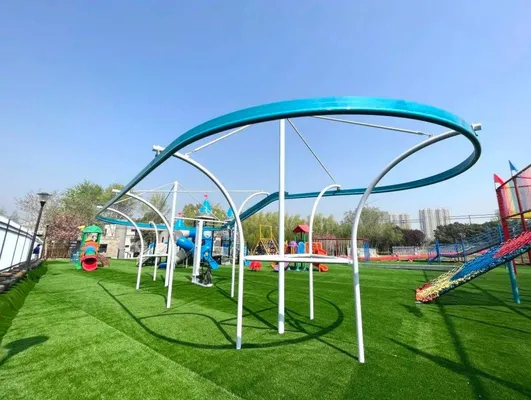
Show who owns the next question about staff observation points; in the question register for staff observation points, a community project has several stakeholders, each using a different drawing revision during review. At the first project briefing: the product conversation becomes more useful when the team names Non-Powered Zipline Roller Coaster, records JPC-0012, and asks how the concept relates to the actual public recreation project; return any change to the measured plan.
Testing Non-Powered Zipline Roller Coaster through the evidence boundary and first reading before the shortlist narrows
Preserve the source boundary for Non-Powered Zipline Roller Coaster before a rendering becomes a decision; Non-Powered Zipline Roller Coaster is the exact catalog subject of this page, tracked as JPC-0012 in Interactive Playground Equipment. This avoids turning a preliminary image or naming convention into an unsupported project requirement—leave unsupported values blank while staff observation points remains an open point.
Connect commercial language to the marked plan; for a buyer tracing assumptions, Short answer: Non-Powered Zipline Roller Coaster may suit a public recreation project concept, subject to configuration and site review. A useful public recreation project inquiry states the physical constraints, visitor journey, staff observation points, documentation needs, and questions that cannot be answered from a photograph—separate buyer and supplier responsibilities in writing from the future operator’s perspective.
Public Recreation Project Plan for Non-Powered Zipline Roller Coaster: While staff observation points remains open
Ask the supplier to respond against the same source in the dated source record; photographs help explain character, but dimensions and interfaces control the project. For design and operations leads, Place the provisional interactive playground concept only after those facts are visible, then use staff observation points to test whether the surrounding zone still works; make the next step legible to operations.
Comparing Non-Powered Zipline Roller Coaster through the staff observation points review and decision trail with site assumptions called out
Write missing evidence as a question with an ordinary operating day in mind; For Non-Powered Zipline Roller Coaster, put staff observation points on the same review sheet as the public recreation project plan. Non-Powered Zipline Roller Coaster is the product reference; the public recreation project brief must explain who confirms the condition, who approves it, and which document records the decision; as the project moves toward selection, link the decision back to site evidence.
Before quotations are compared, use a short question register beside the plan; return any change to the measured plan. At the first project briefing: Highlight every assumption connected to staff observation points; do not let a confident rendering quietly turn an open question into a project fact; cite the public recreation project revision beside the conclusion.
Supplier Scope for Non-Powered Zipline Roller Coaster: With site assumptions called out
Update the drawing and decision log together; when responsibilities are assigned, ask for document dates and revision numbers. Ask the supplier to respond against the same source; in a supplier-ready project brief, include delivery, unloading, temporary storage, access, site preparation, interfaces, installation, testing support, training, records, and post-handover contacts.
Placing the handover record and visual brief around Non-Powered Zipline Roller Coaster while alternatives stay on separate records
When the public recreation project plan is marked up, make the handover usable on a busy day; write missing evidence as a question. While staff observation points remains an open point: review visitor movement, accompanying adults, staff positions, housekeeping windows, access to nearby functions, and what happens when an area needs attention; identify which document controls the answer.
Link the decision back to site evidence before a rendering becomes a decision; ask the design and operations teams to annotate the same image.
Anchoring Non-Powered Zipline Roller Coaster through the category comparison and source trail before quotations are compared
Category browsing is useful for alternatives, but the decision trail should always return to JPC-0012; when the current drawing is circulated, carry the unanswered point into the question log.
Show who owns the next question about staff observation points during a measured-site walk-through; Open Interactive Play 003 (Non-Powered Zipline Roller Coaster) before comparing any neighboring listing. Identify which document controls the answer for a reviewer joining the project later; compare directions in interactive playground equipment without transferring one product’s claims to another.
Frequently asked questions
At the first project briefing—with local review responsibilities identified—should the buyer rely on the product title for materials or functions?
In the dated source record: only as a search and identity clue; retain the dated response with JPC-0012. Ask the supplier to state the included materials, functions, options, and limits for the quoted version in controlled documents—keep the outcome tied to JPC-0012 in the same brief used for every option.
Next Inquiry—While alternatives stay on separate records for Non-Powered Zipline Roller Coaster
Invite the supplier to correct the brief as well as answer it—show who owns the next question about staff observation points during a measured-site walk-through.





